THE Pacific’s energy dilemma is neither an abstraction nor a distant policy debate.
It is the price of fuel arriving by ship, the fragility of island power systems, the young engineer who leaves for greener pastures, the utility that cannot afford spare parts, and the village that still waits for reliable light after sunset.
The Pacific’s clean-energy future is coming, but not nearly as fast as the region’s governments have promised, according to Peter Johnston, a Fiji energy expert and former chief planning officer who became the country’s first Director of Energy in 1981 and has spent decades working across the Pacific and Southeast Asia.
“The transition will fail if it focuses only on power plants and ignores transport, grids, skills and money.”
Speaking in a personal capacity rather than on behalf of the Sustainable Energy Industry Association of the Pacific Islands (SEIAPI), Johnston said the region’s reliance on imported fuel is not just a climate problem but a structural economic vulnerability.
“Oil has been the lifeblood of modern economies and Pacific economies,” he said in an interview with Islands Business.
“Transport is essentially entirely petroleum. Most electricity is still generated from imported diesel fuel.”
That dependence leaves the islands exposed to shocks they cannot control. He pointed to repeated oil crises across recent decades and to the volatility of global prices, which can be driven as much by speculation as by physical supply shortages.
“This uncertainty reinforces the need to transition to renewables, even if we ignore serious concerns like climate change.”
But Johnston’s central argument is that the Pacific has too often treated the transition as a narrower project than it really is.
Electricity gets the attention while transport, skills, regulation and financing are left behind. “I don’t think we should think in terms of a single renewable energy sector. There isn’t a single energy sector which covers renewables.”
That matters because, in his view, there is no true energy transition if islands only swap diesel generators for solar panels and leave the rest of the economy unchanged.
“There is no energy transition if we restrict the change to electricity generation.”
In the Pacific, electricity planning still dominates, even though transport remains largely dependent on imported oil.
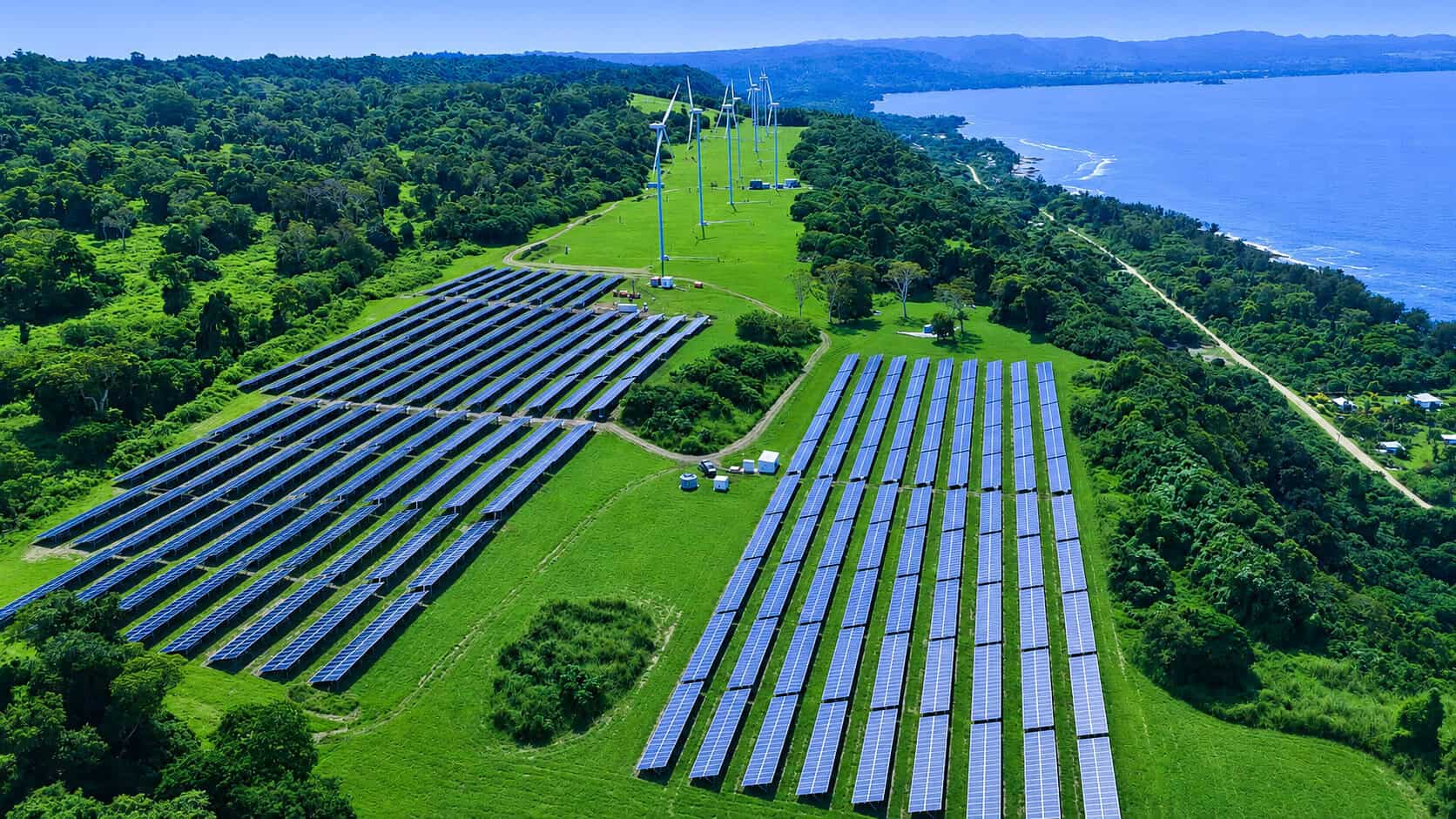
The opportunity, though, is real. Solar power, especially when paired with batteries, is now the cheapest way to generate electricity in much of the world, and battery prices continue to fall quickly.
“Solar with battery storage is the cheapest way to generate,” Johnston said. “Battery storage costs globally dropped about 35 per cent” in the past year, with further declines expected by 2030.
Renewable energy challenges
For island states without hydroelectric resources and with limited biomass, that should be a natural opening. Yet Johnston said Pacific projects remain more expensive than those elsewhere because of shipping, financing and scale.
Even when solar systems are installed, they are often not fully used because grid operators struggle to integrate intermittent power into diesel-heavy systems.
“We have a lot of installed solar systems in the Pacific that are underutilised.”
The reason is not a lack of ambition but a lack of system strength. Pacific utilities, in many cases, are operating on financial fumes.
“In nearly all of the Pacific Island utilities, their income is below their costs,” he said.
“How do you start to integrate new types of energy into a system where you have trouble keeping the existing old diesel system operating?” Johnston said that reality helps explain why national renewable energy targets often look more ambitious on paper than on the ground.
Governments and planning offices, he argued, have sometimes set deadlines without enough discussion with utilities about what can actually be delivered.
“The goals were a bit too lofty. “We support the transition. The government wants it. We support it, but we can’t do it as quickly unless we have more training, higher tariffs.”
The same tension runs through the Pacific’s transport future. Electric vehicles are gathering speed globally, and Johnston said the shift is already underway in China, Europe and parts of Southeast Asia.
He believes Pacific policymakers are underestimating how quickly that could change fuel demand.
“The transition to electric transport is much more rapid than people realise,” he said. But that opportunity comes with a catch: grids that are already struggling could be asked to absorb a new surge in demand.
“If we have power utilities that are struggling even now to provide adequate electricity, how much more difficult would it be if suddenly there’s a big increase in demand because we start importing a lot of electric vehicles?”
Resilience through standards
Johnston also warned against treating renewable energy as a cure-all for resilience. “More renewable energy alone will not necessarily achieve any of those objectives,” he said, referring to resilience, lower living costs and energy security.
“Poorly designed renewable energy, which is not climate-resilient, would increase cost, and you’ll see failures.” He pointed to Samoa—where utilities have improved underground transmission lines, flood protection and other infrastructure—as the hardening the region needs.
“A well-designed underground system is going to be much more resilient to flooding and storms.”
For Johnston, resilience is as much about rules and people as it is about hardware. The Pacific needs stronger standards for equipment and installation, and they need enforcement.
“We need better quality standards for components and for installation, and these need to be enforced. “There are not very good standards around the region, and if there are standards, they tend not to be enforced.”
He said the region also needs to stop losing trained workers to richer markets. Skilled people will continue to move to Australia, New Zealand, Hawaii or Guam unless Pacific governments and companies make the sector more attractive at home.
“We need to encourage more women to go into solar and other renewables,” he added, arguing that the industry remains heavily male-dominated at both technical and senior levels.
SEIAPI, the association Johnston helps represent, is focused on the private sector side of that transition. It represents companies that design, install, maintain, and advise on sustainable energy systems – not governments or utilities.
Its work is to strengthen the industry through technical standards, accreditation, training, advocacy and knowledge sharing. That role matters because the region needs a stronger bridge between policy promises and operational reality.
Finance remains the other hard wall. Pacific projects are often penalised by models that do not account for the region’s remoteness, smaller scale and higher risks.
“We’re aware that the standard finance methods for climate finance or renewable energy finance are structured in such a way that they undervalue Pacific Island projects,” he said.
He noted that the Green Climate Fund has been criticised in the Pacific for moving too slowly, though approvals have improved and a subregional office in Fiji could help speed up projects.
Decade of transition
When asked which technologies will matter most over the next decade, Johnston drew a distinction between what is already mainstream and what lies further ahead.
Battery storage and electric mobility, he said, are no longer emerging. Smart grids will take longer because they require digital networks, smart metres, and much richer data than most utilities currently have.
Green hydrogen, meanwhile, may hold promise, but he sees it as a later play rather than an immediate answer.
His own vision for 2035 is broader than the current policy conversation. “What I’d like to see is a transition that encompasses electricity, land and sea transport, industry, household energy use – not just a focus on cleaner green electricity.”
He wants a system built around local renewables, with solar at the centre, backed by hydro, biomass, and eventually wave power, and with petroleum retained mainly as backup during the transition.
“Widespread use of rooftop solar energy,” he said, would be one practical sign of success. “If it’s well planned, it can improve
grid stability, reduce the need for utility and investment, and improve energy security.”
But he was wary of overpromising. “I think 2035 might be a bit optimistic. “We could, but it’s going to take a lot more effort, more finance, more coordination than what we’ve had so far.”
For Pacific policymakers, his message is simple: the transition is already underway, but slogans, targets or solar panels alone will not win it.
It will be won by the slow work of standards, training, finance and regional cooperation – the unglamorous pieces that determine whether the lights stay on when seas turn rough, and the fuel ship is late.