American Samoa
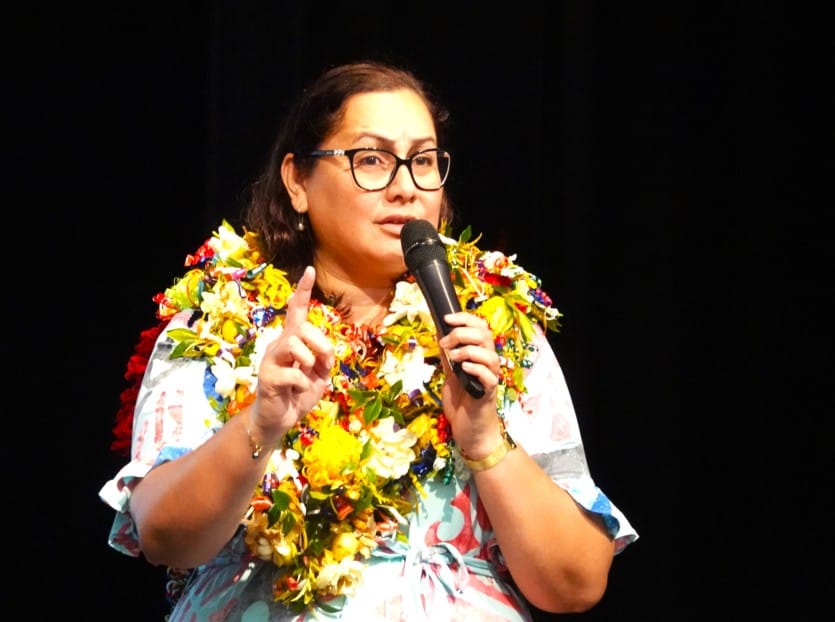
THE federal government is facing opposition over a proposal to designate a certain species of American Samoa’s giant clam as endangered. Members of the Western Pacific Regional Fisheries Management Council (WPRFMC) are outraged over the issue. The group has concerns about how the move would negatively impact culture and food security. A sore point around the issue was the lack of awareness provided to the local community about the issues. Representatives of the Department of Marine and Wildlife Resources are calling for any future such moves to be done in a transparent and open manner.
Bougainville
BOUGANVILLE’S re-elected leader is confident of achieving independence. Ismael Toroama certainly has the mandate, having secured 90,000 votes in the recent elections – a landslide victory. Toroama is nothing if not persistent, having tried repeatedly in the past five years to achieve independence for his people. A 2019 referendum reflected popular sentiment with 97.7% voting in favour of the move. Port Moresby, however, has been reluctant to recognise the poll, and thus follow through with their obligations. Toroama remains upbeat: “I think the confidence comes in line with the way we can consult with the national government going forward. Especially with the Melanesian Relationship Agreement, we can build that into our thinking so that we can reach a common understanding with the national government.”
Commonwealth of the Northern Mariana Islands
CNMI authorities are breathing a little easier after the US Office of Insular Affairs has awarded a $USD5.7 million grant for climate resilience to help maintain essential services during a severe budget crisis. An initial $USD412,500 is available for October costs. Governor David M. Apatang expressed gratitude for the relief, which follows September’s “902 talks”. The funds come with a strict condition: the CNMI must submit a plan to balance its budget through reforms by November 30. Officials praised the joint efforts that secured the support.
Cook Islands
RAROTONGA is grappling with a surge of acute respiratory illness, overwhelming local health services. Cook Islands Secretary of Health Bob Williams confirmed the outbreak is not COVID-19, but a mix of influenza A, rhinovirus, and other seasonal viruses. The outbreak has led to a dramatic increase in hospital admissions and staff absences, straining the health system. Schools are experiencing high absenteeism, and the public is being urged to practice good hygiene, stay home when sick, and wear masks in crowded spaces to slow the spread. Health officials are monitoring the situation closely as the community contends with this wave of sickness.
Fiji
FIJI’S former Prime Minister Frank Bainimarama has been sentenced to a suspended one-year prison term for obstructing a police investigation. The charge stemmed from his attempt to pressure the then-acting Police Commissioner into dismissing two police officers. The sentencing marks the closure of yet another legal matter for the former leader, who dominated Fijian politics for 16 years. As the sentence is suspended, Bainimarama will avoid immediate imprisonment unless he commits another offence within a three-year period.
Guam
GUAM is facing the prospect of the suspension of federal funding for its Supplemental Nutrition Assistance Program (SNAP), if the federal government shutdown continues. This would halt benefits for over 33,000 residents who rely on the program. To prevent a crisis, the Government of Guam is preparing to cover the estimated $USD11 million monthly cost to continue SNAP payments using local funds. The Department of Administration is tasked with finding the money, though it may require delaying other government obligations. Officials emphasise this is a stopgap measure to protect vulnerable families until federal funding is restored.
Kanaky-New Caledonia
PROMINENT Kanak pro-independence leader Christian Tein can return to New Caledonia after a French court overturned a ban imposed by the government. Tein, the head of the Field Action Coordination Cell (CCAT), was among a group of activists restricted from the territory in the wake of the recent civil unrest. The Paris court found the authorities’ decision to block his return was “a serious and manifestly illegal infringement” on his fundamental freedoms. The ruling is a victory for the pro-independence movement. However, Tein and other CCAT members remain under investigation for their alleged role in the protests that paralysed New Caledonia earlier this year.
Kiribati
KIRIBATI is set to boost its emergency medical response capacity with the commissioning of five new sea ambulances. Funded by the UN Development Programme, these vessels will serve the outer islands, providing critical patient transfers to main hospitals. The new equipment will help to address a major challenge in the Pacific nation, where remote communities are separated by considerable distance. The boats will reduce travel times during medical emergencies, improving survival rates and healthcare access. This upgrade is a key step in building climate-resilient and reliable health services for the people of Kiribati.
Marshall Islands
THE Marshall Islands Government has filed a lawsuit to strike out a new law that critics say paralyses the nation’s ability to adapt to climate change. The law requires a super-majority referendum for any changes to traditional land ownership, making coastal protection and relocation projects nearly impossible. The government argues the law is unconstitutional and blocks critical efforts to protect the nation from rising seas. The legal challenge sets the stage for a major conflict between traditional land rights and the urgent need for national climate survival in the low-lying atoll nation.
Nauru
NAURUANS have elected a new parliament, with preliminary results showing big changes as at least six incumbent MPs lost their seats. The election also featured a referendum on a contentious constitutional amendment to extend the presidential term from three to four years, which was resoundingly rejected by the public. This decisive “no” vote reflects public opposition to granting leaders a longer term in office. The newly elected members will now convene to select the next president from among themselves, shaping the nation’s direction for the next three years.
Niue
Niue’s National Broadcaster, the Broadcasting Corporation of Niue (BCN), has officially opened its new studios and offices, marking a significant recovery five years after a devastating fire destroyed its previous facility. The new building provides the public broadcaster with modernised equipment and infrastructure. The opening ceremony had a community feel, celebrating the restoration of an important service. The new facility means that BCN can continue its crucial role in delivering news, information, and culturally relevant content to the people of Niue.
Palau
PALAU’S Senate has reaffirmed its strong opposition to a US proposal to process certain individuals seeking protection in Guam through Palau. Senators argue the plan is inappropriate for the small nation, citing potential social, economic, and security burdens. Despite the US administration’s assurances that individuals would not remain in Palau long-term, lawmakers remain unconvinced. The continued resistance signals a significant diplomatic challenge for the US as it seeks to implement its regional migration strategy within the Freely Associated State compacts.
Papua New Guinea
PAPUA New Guinea’s cabinet has approved a new bilateral security treaty with Australia, known as the “Pukpuk Treaty”. The agreement, finalised in December 2023, establishes a comprehensive framework for enhanced cooperation across security, defence, and law enforcement. The treaty is designed to strengthen the partnership between the two nations, with a focus on supporting PNG’s internal security and stability. The agreement will now proceed to both countries’ parliaments for final ratification before it can be formally implemented.
Samoa
SAMOA is facing a severe food affordability crisis, with more than 40% of households unable to afford a healthy diet. The joint assessment by the Samoan Government and UN agencies highlights the economic pressures forcing families to rely on cheaper, less nutritious food options. The report links the crisis to high inflation, poverty, and climate-related impacts on local food production. These findings raise significant public health concerns and call for urgent policy interventions to improve food security and affordability.
Solomon Islands
THE Solomon Islands is exploring the establishment of a sovereign military force – a move it insists is “not an attempt to militarise our nation”. Prime Minister Jeremiah Manele stated the goal is to build a small, defensive capacity for national resilience and sovereignty. The plan, currently in a consultation phase, would require a constitutional amendment. The government has invited public feedback and emphasised the force would complement, not replace, the role of the Royal Solomon Islands Police Force in maintaining internal security.
Tonga
TONGAN authorities are being urged to implement voting access for its significant population working and living overseas ahead of the November general election. Activists argue that the current system disenfranchises thousands of citizens who contribute substantially to the national economy through remittances. This call highlights a growing tension between modern diaspora realities and traditional electoral laws. With remittances being a substantial economic pillar, advocates contend that overseas-based Tongans deserve to have a direct say in the nation’s political future.
Tuvalu
TUVALU has become the newest state member of the International Union for Conservation of Nature (IUCN), joining a global network of governments and organisations dedicated to environmental conservation. The move underscores Tuvalu’s commitment to making an active contribution on the international stage regarding issues of climate change and biodiversity loss. As a low-lying atoll nation on the front lines of the climate crisis, Tuvalu’s membership will strengthen its access to scientific expertise and partnerships for implementing nature-based solutions and building resilience against environmental threats.
Vanuatu
VANUATU’s Kava Industry Association is strongly opposing a government proposal to allow kava imports, warning it poses a severe biosecurity risk to the nation’s own crops. The Association fears that importing kava, potentially from Fiji or Papua New Guinea, could introduce devastating pests and diseases that would threaten the purity and health of Vanuatu’s unique kava varieties. The group is urging the government to instead focus on protecting and promoting the domestic “Noble Kava” industry, a vital agricultural export and cultural cornerstone for the country.