ON a small island, strong personalities can kill national efforts in the blink of an eye. As Tonga prepares to host the Pacific Games, personal agendas have started to surface, threatening to stop the event from taking place in the kingdom. A sense of déjà vu is building.
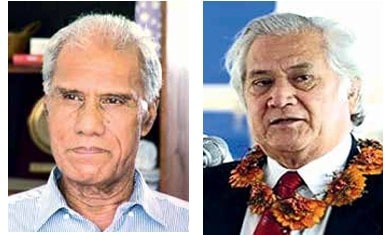
In 2012, Prime Minister Lord Tu‘ivakano and Opposition Leader ‘Akilisi Pōhiva endorsed Tonga’s bid to host the 2019 Pacific Games.
Tonga won the bid but within days, several Cabinet Ministers began to scrutinize the arrangements, seeking out loopholes and grounds for objection.
Fault lines in political unity underscored how personal and political dynamics continued to complicate what had begun as a nationally supported initiative.
Lord Sevele—former Tongan Prime Minister—was head of the Tonga’s Pacific Games Organising Committee and believed the event could go ahead because it was possible to raise the required funding.
In the early 2000s, he and Pōhiva were allies, challenging the monarchy’s absolute rule and calling for reform. However, that dynamic shifted dramatically when Sevele became Prime Minister in 2006. From that point onward, the two became bitter political rivals.
This tension only intensified following a series of national crises: the 2005 Civil Service Strike, the 2006 Nuku’alofa riots, and the sinking of the Princess Ashika in 2009.
Their rivalry was often palpable in parliamentary debates, at times verging on a personal level. So, when Pōhiva became Prime Minister in 2014 and Sevele was serving as Chairman and CEO of the Organising Committee, the friction between them naturally continued, shaped as much by history as by the politics of the moment.
Ahead of the Games bid, a survey conducted by Professor Semisi Taumoepeau of the Auckland Institute of Studies projected that the 2019 Games would attract between 5000 and 8000 overseas visitors and participants over two weeks.
The expected gross income to the local economy was approximately TOP 200,000 from tourist spending, catering, entertainment, ticket sales, local sponsorships, and related activities.
Through strategic branding and franchising, the Organising Committee anticipated raising up to TOP 20 million by securing exclusivity rights over seven years. These rights would be offered to local telecommunications and broadcasting companies, mobile service providers, airline operators, and other commercial partners. If executed effectively from the outset, investor returns could potentially double or triple.
In addition, infrastructure development, funded mainly by foreign governments, was projected to inject another USD 60 million into the economy. The Games were designed with long-term sustainability in mind, ensuring that infrastructure would be cost-effective to maintain post-event.
Under the theme “Our People, Our Games” and the slogan “The Biggest Little Games in the Pacific”, the 2019 Games aimed to showcase Tonga’s ability to host a major regional event with minimal cost and maximum legacy.
Drawing inspiration from the 1989 Mini Games, which featured just 10 sports but delivered enduring assets like the Teufaiva National Stadium and the ‘Atele Indoor Stadium, the 2019 edition was set to feature all 26 sports – a historic first.
Had the Games proceeded as envisioned, Tonga stood to gain an estimated USD 80 million in combined liquid and capital assets, along with a legacy that could serve the nation for generations.
When Tonga abruptly withdrew as host in 2017, the ripple effects were felt across the nation. For planners and organisers, the decision was demoralising, nullifying years of groundwork. Businesspeople and investors faced dashed expectations after preparing for a significant economic boost. Athletes and coaches were devastated by the loss of home-ground advantage and the opportunity to elevate Tonga’s
sporting profile.
Even everyday citizens, many of whom remembered the legacy of the 1989 Mini Games, expressed frustration over the missed chance for national pride and development.
The question for Tonga now is: will the 2031 Games go ahead?