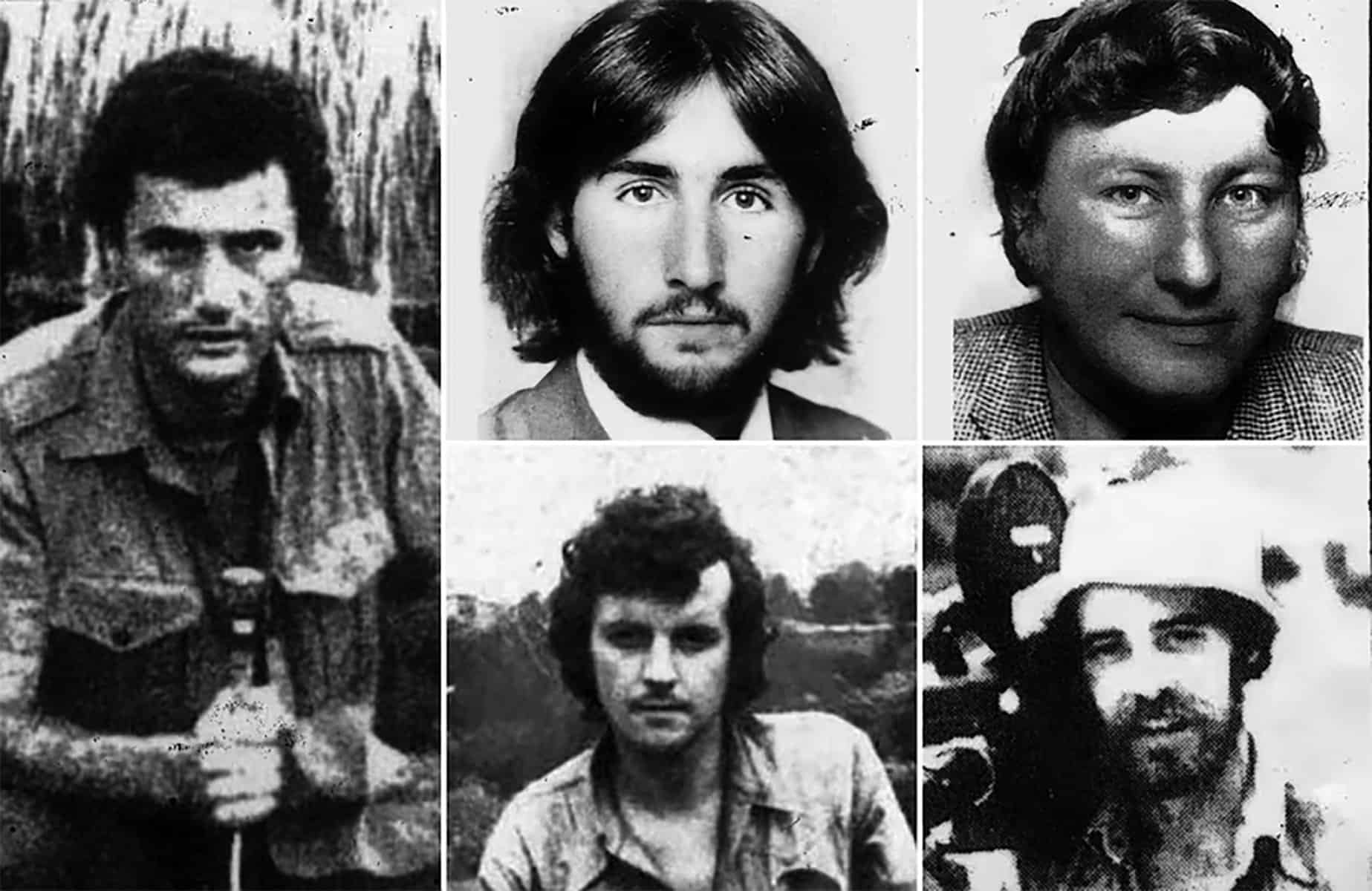
ON a dusty hillside just east of the border with Indonesia, five Australian journalists met their deaths at the hands of Indonesian special forces troops.
Stabbed repeatedly and then shot by Komando Pasukan Sandhi Yuda (Special Forces Commando), their remains were cremated twice in an effort to erase them from living memory.
That was October 1975 as Indonesian troops invaded the Portuguese enclave of East Timor, today’s Timor-Leste, in an effort to extend territory and gain access to rich gas reserves in waters off the coast.
Pushing through Balibo Town, Indonesian forces came across what was known as the China Shop – clearly marked with an Australian flag scrawled on the wall by journalists covering the invasion.
Inside the building were Australian reporter Greg Shackleton, 29, and sound recordist Tony Stewart, 21; New Zealander, Gary Cunningham, 27, cameraman for HSV-7 (now part of the Melbourne-based Seven Network; British cameraman Brian Peters, 24, and reporter Malcolm Rennie, 29, of TCN-9 (part of the Nine Network).
With total disregard for human life, the Indonesians stabbed and shot the men, destroyed their cameras and film, and in a final humiliation, ordered local Luis Perera to cremate the bodies – twice.
An inquest headed by New South Wales Magistrate Dorelle Pinch in 2007 heard that the men—despite having their hands raised in a sign of surrender—were stabbed and shot on the orders of Captain Younis Yosifah.
It also identified Commando Christoforus da Silva as the soldier responsible for stabbing at least one of the journalists. Indonesia claimed the men were killed in crossfire between the invading forces and the local resistance, but this has been disproved by witnesses.
After the inquest, the Australian Federal Police opened a murder inquiry. This was later closed, with investigators citing insufficient evidence and jurisdictional barriers.
That is a technical term which can be translated into Indonesia refusing to allow access to the sight and witnesses. And that has been the typical Indonesian approach when dealing with allegations of atrocities and human rights abuse.
Australian Prime Ministers since 1975 have chosen to remain silent on the issue or promised to act, yet done nothing to bring the perpetrators to justice.
In an interview with the Australian media prior to her death in 2023, Shirley, the wife of Greg Shackleton said: “There is a constant pattern of deception from the Australian Government. [Prime Minister] Kevin Rudd has vowed that the Indonesian military should be held to account, but privately, the Australian Government doesn’t do anything. This hasn’t just gone on since the coroner’s report, it has gone on since the murders.’’
With two-way trade between the countries valued at around $AUD20 billion, it’s unlikely that Australia will want to jeopardise relationships with its northern neighbour. Cattle exports alone are worth $AUD12 billion to Australia, which educates thousands of Indonesians every year and earns $AUD500 million in this sector.
Apart from being the chosen destination for 910,000 Australians every year, Indonesia—with the 13th largest military force in the world—is close enough to target Australia effectively by land, sea, and air.
Fifty years after the brutal murders of five Australians on a dusty hillside in Portuguese Timor, the issues remain buried in the rubble at Balibo.
For in Australia where everyone gets a fair go, trade with Indonesia is more important than justice for the dead.