COP30 in Belém will be remembered as a collision of hope, heartbreak, and hard truths. The host city, home to the Amazon’s vast lungs became the epicenter of global climate tension, a place where Indigenous rage met geopolitical pressure, where promises faltered, and where the Pacific’s moral clarity cut through the noise.
What began as a “COP of Implementation” quickly evolved into what many called the “COP of Truth”. Expectations were high, especially for the Pacific. But as the days unfolded, it became clear that truth was far harder to secure than headlines suggested.
“We go home with just our water bottles”
International Policy Lead for the Pacific Islands Climate Action Network (PICAN), Sindra Sharma, has spent more than a decade inside negotiation rooms. This year, she sensed something different.
“The last COP was horrible; it was very depressing and there is a joke that we say when we are in these climate spaces: we go home with just our water bottles. But at this COP, I think it’s the weight of the moment – coming back to where the Rio Convention was born, reaching a decade since the Paris Agreement, and being in the lungs of the Earth (the Amazon). There is a lot of responsibility on the presidency for their legacy,” Sharma said.
For Sharma, the urgency was unmistakable. The science is irrefutable, and the world is at a crisis point.
“So, all this weight and moment is creating what Pacific people do so well, which is action, you know, we’re ready to act, and we are going to hold it till the end.”
Yet, inside negotiation rooms, it was a different story.
Science under attack
With the ICJ confirming scientific truth at the highest judicial level, Sharma described how science itself was undermined in real time. Negotiations under the “research and systematic observation” track, normally the factual backbone of climate talks, became battlegrounds.
“The science is being challenged live right in front of you. It’s being challenged in a way that feels very harmful to the truth… and we’re seeing how then that undermining and politicisation of science in this room bleeds into all of the others,” Sharma said.
Brazilian President Luiz Inácio Lula da Silva framed COP30 as the “COP of Truth”, but the final text landed far from that aspiration.
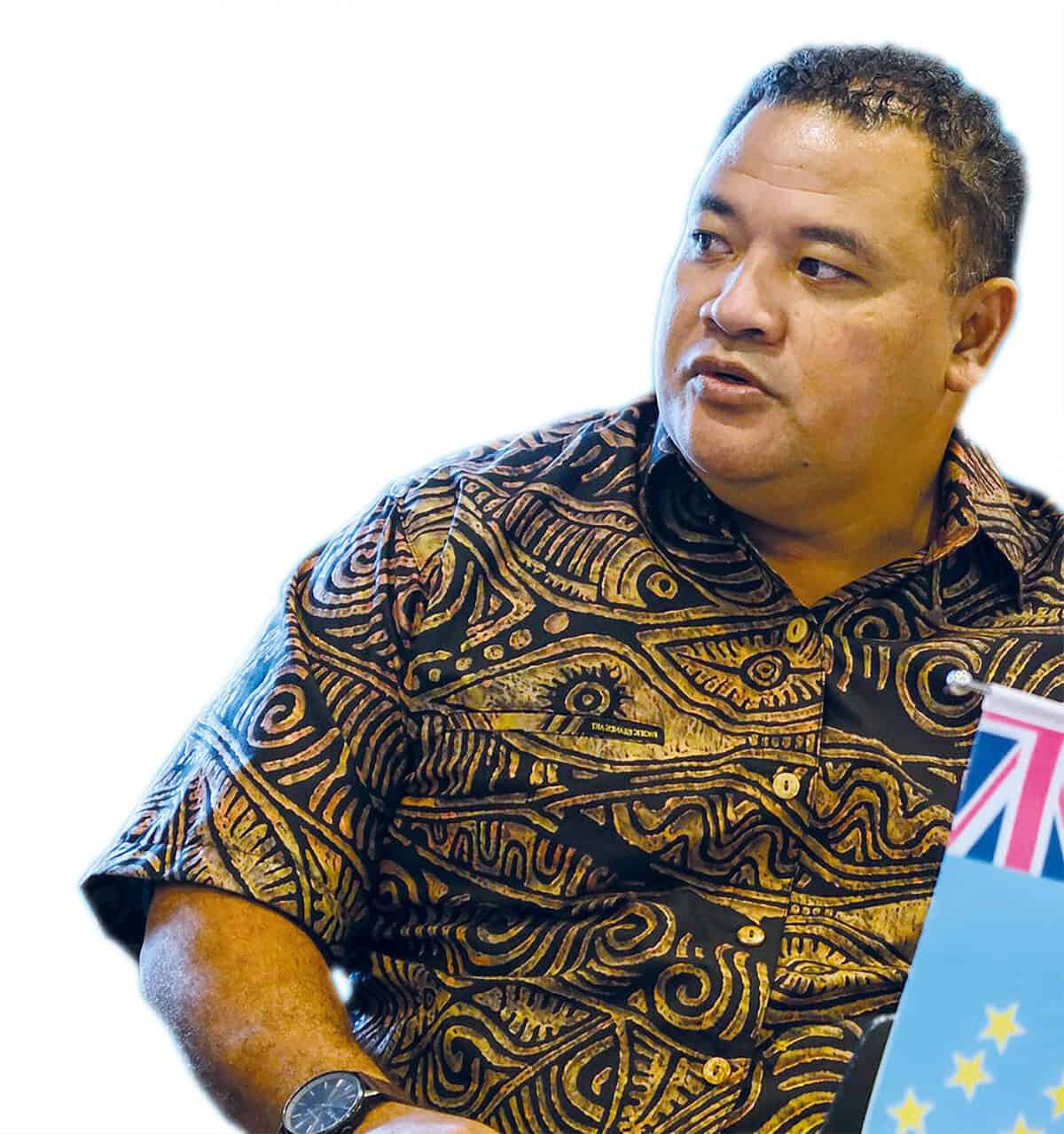
Tuvalu’s Climate Change Minister Maina Talia put it starkly.
“The issue of the COP of truth—it’s not about carrying it forward—but we have lost it.”
Sharma was even more direct.
“This COP of Truth revealed one thing: developed countries and emerging economies alike will go to extraordinary lengths, at the cost of their people and ours, to protect their own agendas,” she said.
“There is nothing to celebrate, that is the truth, all we have done is defer action, given room for growth for fossil fuels, redlined justice, and harmed the integrity of science.”
For Pacific Small Island Developing States, the failure to secure a fossil fuel phaseout or grant-based finance is more than a disappointment; it is existential.
Indigenous anger boils over
On the second day, Indigenous Amazonian protestors stormed toward the Blue Zone, demanding a voice in decisions about their own land. Chants turned into clashes as security attempted to block their path. It was raw, emotional, unavoidable – an eruption of communities long ignored.
Their written statement, shared by the Munduruku Ipereg Ayu Movement, was a plea to participants.
“President Lula, we are here in front of COP because we want you to listen to us, we refuse to be sacrificed for agribusiness,” the statement proclaimed.
“Our forest is not for sale, we are the ones who protect the climate, and the Amazon cannot continue to be destroyed to enrich large corporations.”
Disasters amid the climate conference
Even the venue itself echoed the climate crisis.
Heavy rain caused the Moana Blue Pacific Pavilion to flood, forcing Pacific events to shut down for the day, while other pavilions stayed dry. For many delegates, it felt painfully symbolic, the climate impacts they came to speak about were now following them inside COP.
Then, chaos struck again. An electrical overload triggered a fire, sending delegates fleeing from pavilions.
“The fire originated from an electrical overload in the pavilion zone; it was fully extinguished and no serious casualties were recorded,” Shree Goundar said.
Finance fights, fractured Trust, and the host country battle
Negotiations resumed and grew tense as developing countries, including the Pacific pushed for triple adaptation finance.
Meanwhile, the battle over who would host COP31 intensified.
Dame Jacinda Ardern amplified the Pacific’s long-standing call: “It is time for a Pacific COP.”
But hopes collapsed when Australia conceded the COP31 presidency to Türkiye.
Australia’s Minister for Climate Change and Energy, Chris Bowen, said: “Turkiye is a determined and formidable competitor.”
And defended the compromise, “Without agreement, hosting rights would have defaulted to Bonn leaving COP31 leaderless for a year and is irresponsible for multilateralism.”
For Pacific delegates, the loss was gutting.
Pacific entrepreneur and climate scholar Benjamin Mitchell recalled breaking the news: “I shared the news to our Fijian brothers, delegates and ministers and unfortunately the high stress, emotional fatigue and high hopes were met with a drop of heads, head shake in disbelief and almost powerless moment of vulnerability.”
Pacific civil society condemned the final COP30 outcome.
Sharma summed it up with painful clarity: “All we did was to create processes instead of delivering outcomes.”
350.org Pacific Team Lead Fenton Lutunatabua added: “With the Just Transition Mechanism, we arere seeing progress, but without a plan to phase out coal, oil and gas, we’re stagnating at a time when our islands can’t afford even a small amount of delay.
“The COP30 statement does not mention a plan to end fossil fuels… The closing window on 1.5℃ means we’re walking a fine line here between survival and climate catastrophe.”
COP30 ends not with celebration, but with clarity: the Pacific is running out of time but not resolved. Amid fires, floods, protests, and political trade-offs, one message resounded louder than all: The Pacific will keep fighting. The Pacific will keep pushing. The Pacific will keep 1.5 alive.


