TONGA’S recent elections have had little impact on the world outside the Pacific’s remaining kingdom.
For 150 years, the Friendly Islands—a term coined by the British navigator Captain James Cook—have maintained control and sovereignty without external interference. Its status has transitioned from monarchy, to British protected state, to experimental constitutional democracy.
The experiment with democracy began in the 1990s after resentment began to brew among some commoners due to the attitude of certain members of the royal family regarding taxes and national spending.
Controversy surrounding the involvement of members of the royal family in a telecommunications monopoly, the failed national airline, and the sale of Tongan passports to Asian—mostly Chinese—businesspeople.
Into this situation stepped ʻAkilisi Pōhiva—a teacher and journalist—recently returned from the University of the South Pacific in Suva, Fiji. He began to advocate for greater accountability from then-King Taufa’ahau Tupou IV to the people.
Dismissed from the public service, Pōhiva successfully challenged his dismissal in court and entered journalism and advocacy with passion, eventually becoming Prime Minister in 2014.
Through Pōhiva’s pro-democracy movement, the people forced Tupou IV to agree to a series of reforms that the king thought would stall the effort toward constitutional democracy.
Tupou IV died in 2006. Later that year, riots in the capital Nuku’alofa led to the burning of Chinese businesses and the intervention of New Zealand troops to quell disturbances. The new king, Tupou V, hurriedly implemented a reform process which saw the constitution amended in 2010 so that 17 of the 26 members of the legislature would be elected by popular majority.
Instead of royal appointment, the Prime Minister would be elected by a parliamentary majority. This was a concession by the royal family—a compromise—between radical and conservative forces and an attempt to prevent total loss of power.
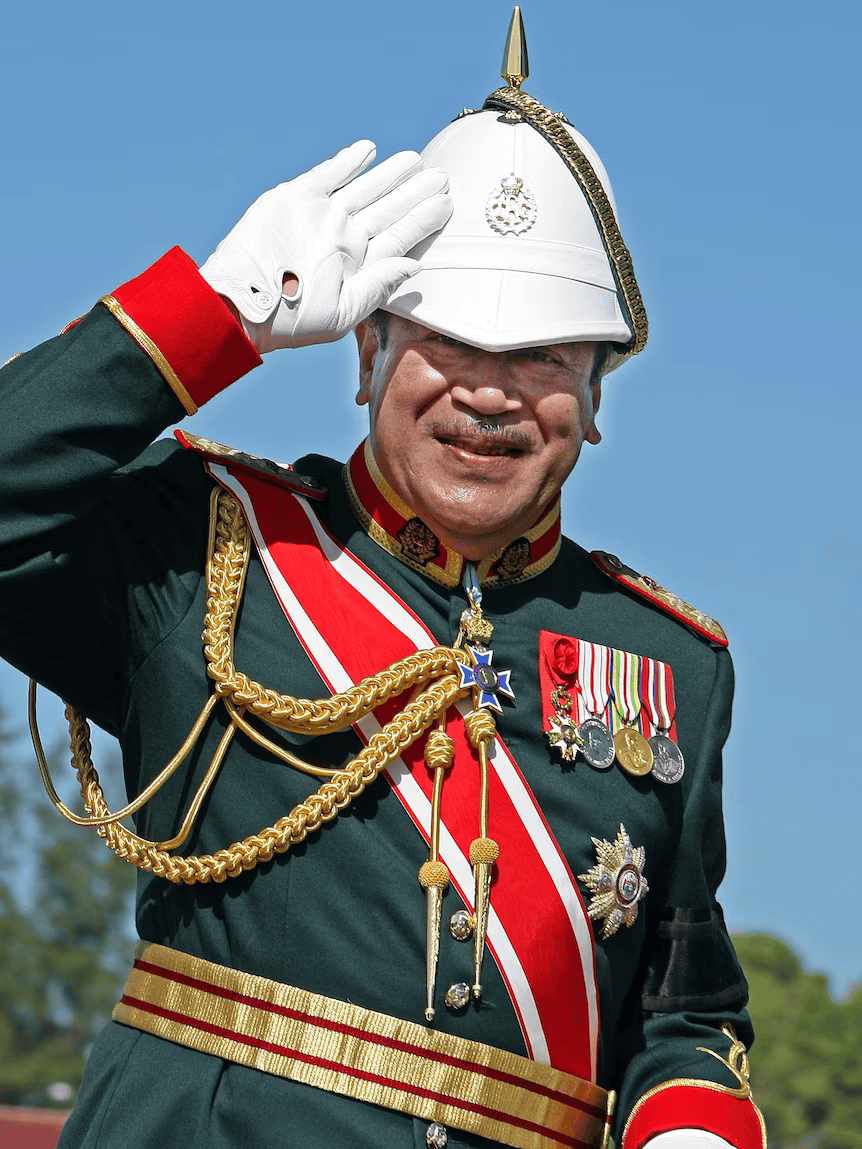
But two years later, Tupou V lost a battle with cancer and was succeeded by his younger brother, the conservative, British-educated naval officer Prince Ahoʻeitu ʻUnuakiʻotonga Tukuʻaho, now King Tupou VI.
It did not take long for relations between the new occupant of the palace and members of the Fale Alea (Parliament) to sour. Pōhiva won the elections in 2014, and Tupou VI was legally bound by a constitution he probably did not want, to give his assent to a known enemy of the crown.
Three years later, Tupou VI dissolved Parliament but Pōhiva won the ensuing elections.
Ironically, Pōhiva maintained control over his parliamentarians and the electorate with an iron fist. His charisma kept the independence or pro-democracy movement alive and allowed a not-uncomfortable tension between the people and the palace.
With his death in 2019, the political scene was taken over by politicians who were willing to show some flexibility towards the king. Among them were a large number of independents, and this weakened the solidarity of the representatives of the people.
Behind the scenes, Tupou VI had started to assert his authority, beginning with greater control of the Tonga Defence Services, which was renamed His Majesty’s Armed Forces.
Last year, Tupou VI used his constitutional powers to remove his confidence in Defence Minister Siaosi Sovaleni and Foreign Minister Fekitamoeloa Katoa ‘Utoikamanu. At the time, Sovaleni was also Prime Minister.
In December, Sovaleni quit and ‘Aisake Eke assumed the role of Prime Minister. Eke and the palace have denied suggestions that the king forced the changes.
But one of Eke’s early decisions was to appoint Crown Prince Tupoutoʻa ʻUlukalala as Minister for Foreign Affairs, in a move seen as an acknowledgement of the palace and the king.
Subsequent elections have allowed the return of Eke and Sovaleni to Parliament, but there is little doubt that Tupou VI will use the votes of the nobles’ representatives to ensure his grip on the Fale Alea.
In a recent opinion piece, Tongan political commentator Lopeti Senituli described Eke as having a technocratic approach to governance. He said Eke had prioritised economic efficiency over ideological ideals.
The ultimate question is: will Tongans be satisfied with a stable economy to the point that the king’s powers and a possible loss of political power can be overlooked?
The first quarter of 2026 will show whether Tupou VI will allow the continuation of the constitutional reforms implemented by his father and brother. His intentions will become clear when the Prime Minister is elected. Will he influence the process? How will the king react if he is unhappy with the process?
Tupou VI has shown in the past that he is willing to appear calm while manipulating processes with the powers granted to him by the constitution.
Will that 150-year-old document allow him to claw back royalty’s losses over the last quarter of a century?