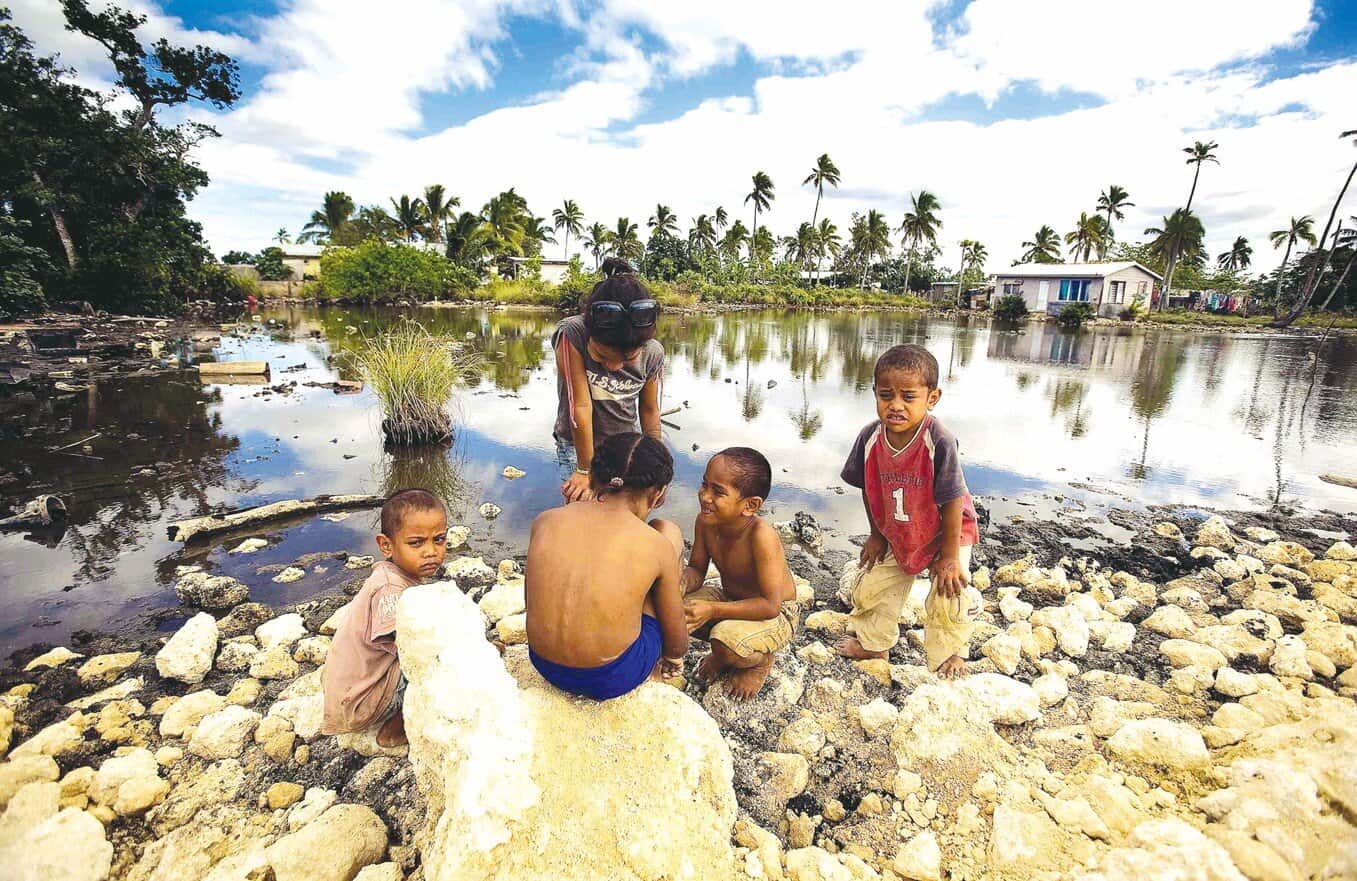
THERE is no country in the Pacific where climate change has not reared its ugly head and threatened the lives of the people.
Described as the region’s existential threat, this global phenomenon has found its way into development finance, geopolitical posturing, and bilateral agreements.
In conversations and on social media, both at home and abroad, the issue is discussed frequently and forcefully. While it is now a subject studied at universities, few efforts have been made to ensure that the young people of the Pacific learn about this silently approaching destroyer.
In the late 1980s, regional meteorological experts first raised concerns about rising temperatures, increased drough and catastrophic weather incidents. El Nino and La Nina became more widely understood.
The media began to cover the Kyoto Protocol, ozone depletion, and the link between chloro-fluorocarbons and rising temperatures.
Yet children at school remained blissfully unaware for decades. No attempts were made to ensure that climate change was situated in classrooms where young minds could be prepared to address a matter integral to the new way of island living.
What minds do not understand, they will usually treat with apathy or skepticism.
That is why climate change must become part of the regional curriculum. Primary school students can be taught about this complex issue through colourful books and posters.
They must be shown the danger of plastics, the need to reuse and recycle, and taught the role of responsible citizens.
It must be made clear to our children at the earliest opportunity that this planet—on loan to adults from the next generation—is under threat from callous human beings who litter indiscriminately, and who fail to take the necessary measures to reduce carbon emissions.
Enlightened children and youth may be what is needed to compel adults to be more responsible.
The need for recycling cannot be over-emphasised, and there are employment opportunities in this industry for those who dare to make a difference.
There are, of course, two other pressing issues – the increased use of methamphetamines, and HIV and AIDS. The link between these issues and the impact on the health and law and order sectors is well documented.
The challenge is to address these issues in homes and classrooms as soon as possible.
With primary school students acting as drug mules and girls becoming pregnant before their teens, there is no time.
Teenage pregnancies, drugs and HIV will spiral out of control before 2030 if extreme action is not taken immediately.
That means facing the issues head-on in a new syllabus designed to be understood by the young.
For the sake of a sustainable planet and the future of our children, the curriculum in Pacific classrooms must change.
It must address specific needs and concerns. To not make these changes now is the height of irresponsibility.