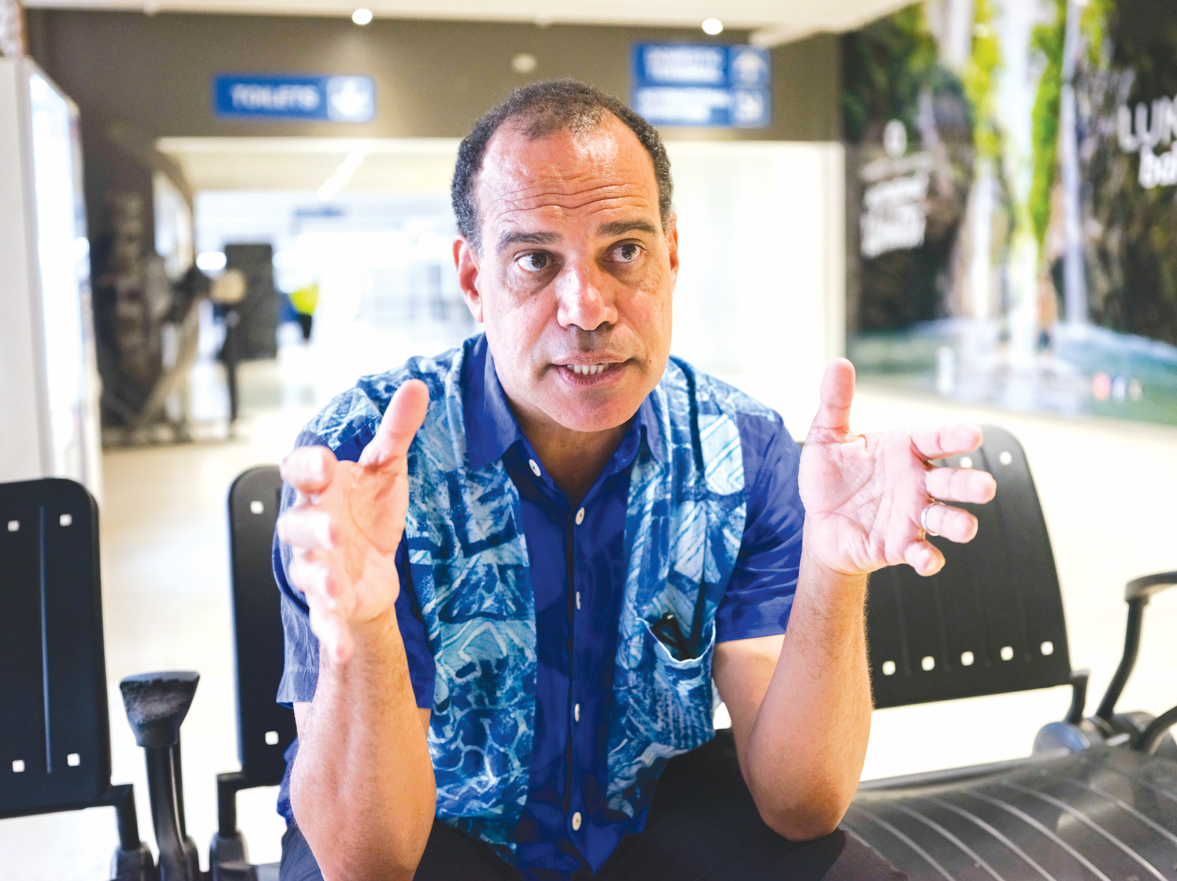
RALPH Regenvanu has consistently spoken out on the issue of climate change at home in Vanuatu, in the region and on the global stage. In April, he launched the Tassiriki Appeal as a new initiative to keep global warming reduction targets on the global agenda. Delphine Barrais spoke to Regenvanu for Islands Business (IB).
IB: You launched the Tassiriki Appeal on 15 April. What is the purpose of this appeal?
Regenvanu: We met with five other small island developing states in the Pacific to prepare for the first international conference on the energy transition in Santa Marta, Colombia, at the end of April. We wanted to reaffirm our common position on the issue of the transition away from fossil fuels. The Paris Agreement has set a limit of 1.5 degrees Celsius by the end of the century, and this must be our shared goal. It is a goal based on scientific consensus, and to preserve the world, we must all do everything we can to meet this limit or, if we exceed it, to stay within it and limit the overshoot. Vanuatu has set itself a goal of 100 per cent renewable energy in the islands by 2030. We also support the Intergovernmental Panel on Climate Change (IPCC), which is facing criticism from some quarters.
IB: In this appeal, you express concern about carbon capture projects. Could you explain this to us?
Regenvanu: The production and use of fossil fuels contribute, by far, the most to the emissions that cause global warming. When a country starts talking about carbon capture, geoengineering, and other such things, it distracts from what should be happening: the transition, the abandonment of fossil fuels. We fear that the time and money devoted to these solutions are wasted. We must reduce our use of fossil fuels!
IB: Are other states invited to join you?
Regenvanu: We invited everyone to the meetings that led to the preparation of this appeal, but for various reasons, such as elections or cyclones in the region, we were unableto gather everyone in Port Vila. Only the five signatories were able to send representatives with ministerial mandates.
IB: A vote was scheduled for March to translate the advisory opinion issued in 2025 by the International Court of Justice (ICJ), at Vanuatu’s initiative, on states’ obligations regarding climate change into strong climate action. Has it taken place?
Regenvanu: No, it hasn’t happened yet due to some pressure. We are still negotiating the text of the resolution in New York. I am in direct contact with the United States by telephone; discussions are ongoing. We are now at the stage of direct bilateral diplomacy to try to find a compromise. A first draft was presented, then a revised second version. We are working on a third version. We hope for a vote in May.
IB: Other international meetings are held regularly on the issue of the environment and climate change. Are you satisfied with them?
Regenvanu: No, we are never satisfied with the COPs, for example. We don’t expect anything in particular from the next one in Turkey. We will go, we will do our best, as we always do. There are some small advances, but never enough. On the other hand, we have high expectations for the recent entry into force of the BBNJ, this new international agreement on the oceans. All meetings are important, but this one is new and should allow us to establish some direction for our work. In particular, it will allow us to address the issue of deep-sea mining, an issue that divides the Pacific. Some Pacific countries are for it, others are against it. Vanuatu is waiting for further scientific studies before making a decision.