“IN all life, one should comfort the afflicted, but verily, also, one should afflict the comfortable, and especially when they are comfortably, contentedly, even happily wrong.” — John Kenneth Galbraith
THESE words, spoken some 60 years ago by the Canadian America economist, diplomat, public official and intellectual, John Kenneth Galbraith, remain true today.
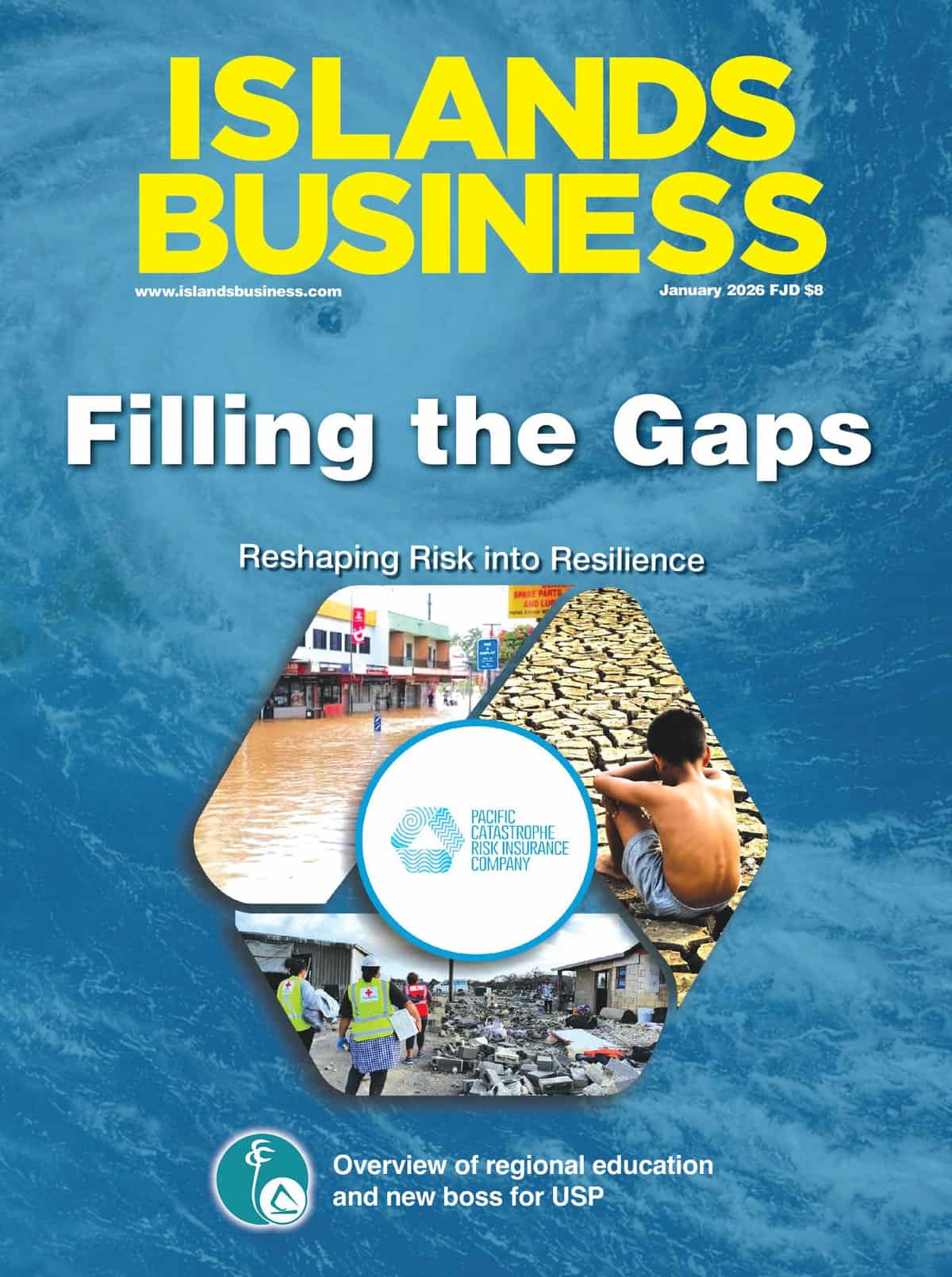
In this region, the Pacific, our leaders have become comfortable with climate change to the extent that they will mouth the usual statements at international conferences and speak of justice, loss and damage, climate migration.
They have become comfortable in the belief that climate change was caused by external forces and the consequences are the responsibility of donors, international NGOs, and foreign governments.
And so, our people continue to suffer as the ocean slowly but surely claws away at the coastlines and saltwater oozes menacingly from beneath the soil, destroying drinking sources, vegetable gardens, and the foundations of our homes.
Churches too have become comfortable. They believe governments will source funds for the climate change battle. And so, the churches preach of a better life in a promised Heaven, a place where those afflicted in this life may find comfort in the next.
All the while the churches take tithes and offerings, convincing the congregation that God loves a cheerful giver.
So our people continue to suffer.
Where is the media in all this?
While Galbraith was ostensibly speaking of economic policies—in particular Keynesian economics and the need for
government intervention to produce jobs and growth—his lessons are applicable to the media today.
The media has a responsibility, perhaps even a sacred duty, to afflict governments to the extent that they actively participate in the battle against climate change. Waiting for funding is not an option. Governments and the people have a responsibility to do what they can—as little as it may be—to protect vulnerable communities, prepare families for relocation, and introduce new laws around land ownership.
Partnerships and understanding are essential to make this possible.
This is also where churches should be today – divesting itself of its vast tracts of land to offer new homes for those in need, food gardens for the hungry, employment for those who must support families.
This is also where the media must find itself today, afflicting the comfortable in churches and governments, pointing to the
inconsistencies in policy, exposing the injustice of current land laws, highlighting the good which has been done.
For far too long, the media in Fiji has suffered from the 24/7 News Cycle Virus. That’s the disease of chasing the next big story while failing to expose the roots of the social issues which cause corruption, crime, injustice, poverty, and racial inequality.
With church, State, and the media all comfortable in their current mode, who will change the way they look at climate
change?
The Catholic theologian David Tracy suggests that the church must teach people how to look at the world as it is and simultaneously hold in their minds what it could become.
This is not a fantasy nor is it denial of the seemingly hopeless situation around climate change. Tracy calls this “disciplined attention to what reality itself suggests is possible.”
Typical Pasifika theological interventions on climate change include care for creation, responsible stewardship, care for the vulnerable, justice rather than charity, and holding polluters accountable.
These are not necessarily wrong, but they do lean heavily towards a “them and us” binary situation, which can be very
uncomfortable because it implies guilt must be borne by one party.
Tracy would argue that we must approach climate justice from what he calls a both/and angle rather than either/or.
Industrialised nations have caused damage, but we use their products openly. Surely, therefore, we must accept some responsibility for the situation. That there are deep systemic injustices between the wealthy Global North and the poorer Global South is true.
But that must not allow Pasifika to claim victimhood and absolve it from the need to take its own climate change actions. There have been suggestions that to solve the climate issue, there must be a change of heart—in Christian terms a metanoia—affecting our thinking and behavior. That is as true for the Global North as it is for us in Pasifika.
This transformation is something which the media must undergo. How do media owners change the coverage of climate change and relocation? What policies must they put in place to allow journalists to make a shift in the way they cover this pressing issue?
One option is offered by Pope Leo XIV in his recent encyclical Magnifica Humanitas: “Let us invest in education, beginning with ourselves! We all need to learn how to engage with the digital world in a human way, as an integral part of our education in the faith and in a life lived according to the Gospel.’’
Media organisations must train their journalists to have a full understanding of climate change, the causes, repercussions, economic and social impacts, policies – the list is endless but the issues are linked.
Climate change is relational and affects the whole of life – individuals and communities are affected equally because the individual lives in the community and the community contributes to the individual.
Within the community are held the wisdom and ideologies of our people dating back to a time before Abraham emerged
from Ur to enter into a covenant with the God of Israel – and not the state but the people.
That Pasifika interconnectedness between people, God, creation is a lens the media must turn on governments and churches today to challenge what is held to be normative, disrupt the conventional, and see where the old holds solutions for today.