THE WHISPER of the seas began as a low hum in Donald Apad’s childhood; a language of salt and spray taught to him by his grandfather. For generations, these whispers shaped his people, telling them when to harvest and when to watch the horizon. But now, the whispers have grown louder, more insistent. The water no longer just visits the shore; it lingers, creeping toward their house where Apad’s father once was.
While the world tells him to move to higher ground, Apad looks at the notches and the memories carved into the craftsmen frame marks of his childhood and children’s signs in their home and the reef where his family has fished for a century. To leave is to lose the very echoes that tell him who he is.
Donald Apad grew up on the coastal shoreline of Ijuw. Not a yard, but a living edge where the bush met the sea. In his father’s time, their house was handmade. Walls woven from epo, the pandanus fruit tree. Posts from coconut timber. Roof thatched with coconut leaves. No electricity, only a kerosene lamp at night. It was a house that could breathe.
And around that house was everything: epo for food and weaving, emet for medicine, tall coconut trees for drink, the shady iren tree where they cleaned fish, the big ijo trees – the guardians that held the entire shoreline together with deep roots, pawpaw trees with sweet fruit for children, and bwabwa trees, the nut fruit that fed them when the sea was rough.
Back then, the shoreline of Ijuw was wide. White sand, then dark, rich soil. The reef in front of Ijuw was a pantry where he and his forefathers fished for a century. Apad’s father passed when Apad was 20, the sea changed. The sea reached right under the house. It took soil. First, it took the sand, then the dark soil. The roots of the epo were left hanging in the air. The old handmade house could not stand in salt water.
As Apad rebuilt—as all families in Ijuw now do—modern and simple: concrete floor, concrete blocks, tin roof. A strong house. And with it came electricity. Lights for his grandchildren to study. A fridge. Power points and switches. In the old days, they didn’t use electricity. Today they must. This is one of the hidden impacts Apad’s family faces because they live near the coast. Because the sea now lingers right under the house. Salt coats everything. The low power points and switches become dangerous – they electrify his grandchildren when touched after a heavy spray. He has to cover the kitchen point with tape.
Everything metal has turned to rust within the warranty time frame. Roofing iron that should last 15 years turns orange in three. Hinges, louvre frames, nails, the fridge, the freezer – all eaten by salt. Apad does spend on his housing as much as he can, pays an electrician. He tries. But he can’t keep up on his house maintenance. The sea is faster than his wage. What he fixes in January, the salt takes in February.
Outside, the loss is the same. The heat of the sun has changed the food source in the sea. The reef of Ijuw, once brown and green and alive, is white. The fish are gone. On land, the epo bears small, dry fruit. The emet curls. The bwabwa nut fruit and pwapwa no longer fruit well. Even the big ijo trees are dying, roots rotting in salt.
Apad stands in his concrete house. The floor is damp even at low tide. The window is rusted though it is new. On the doorframe are the notches of his children’s height, his grandchildren’s height. And next to them, a dark salt watermark where the last king tide came inside, through the house.
In his father’s handmade house, you could repair a wall with epo leaves from behind the house for free. In his grandchildren’s concrete house, you need money for cement, wire, and iron that rusts before its time – money a family in Ijuw cannot find.
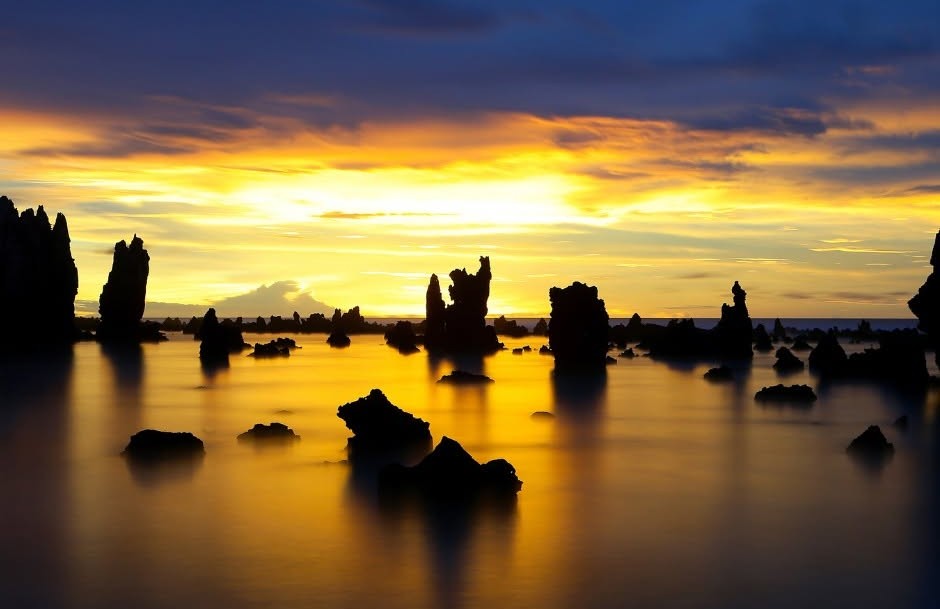
This is climate change mobility for our tiny island Naoero. It is not just about moving to higher ground. Higher ground in Naoero is phosphate pinnacles where nothing grows. It is about a man who spends on a house that shocks his grandchildren, that rusts faster than he can repair, while the epo, emet, iren, ijo, coconut, pwapwa and bwabwa that fed and healed his family disappear.
To leave Ijuw is to lose the taste of bwabwa nut and epo, the medicine of emet, the shade of iren, and the reef where his father taught him to fish.
Apad still listens to the whispers of the seas in Ijuw, he still tells stories to his families the changes before his eyes. But now, the whispers are getting louder through the weather pattern.