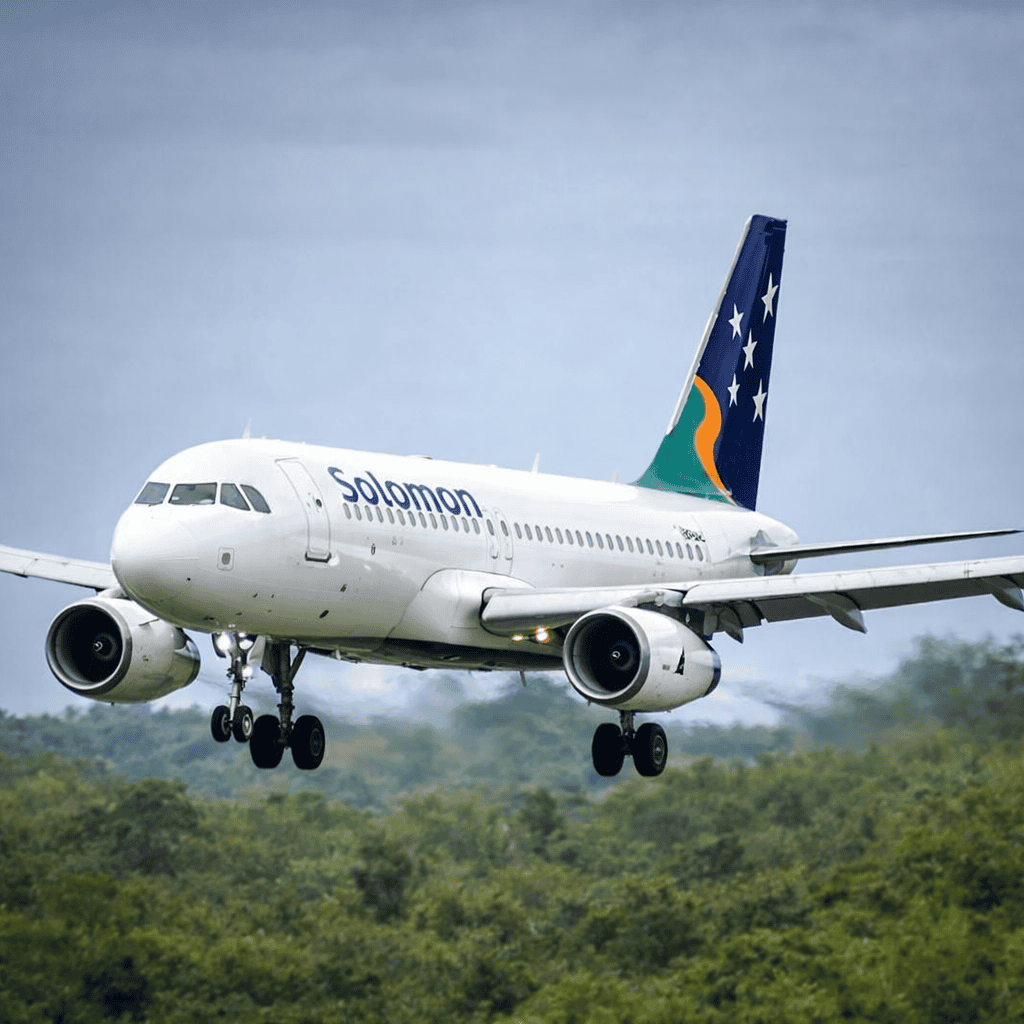
SOLOMON Airlines says it is prioritising reliability, financial discipline and people development as it navigates rising global fuel costs and a recovering Pacific aviation market.
Chief Executive Officer Matthew Findlay—who recently took up the role—said the national carrier has focused on maintaining operational resilience despite ongoing global supply chain disruptions and sharply higher fuel prices, which remain the airline’s single largest operating cost.
“Our main successes have been in maintaining service frequency during a very challenging period,” he said. “Rather than making reactive cuts, we’ve taken a careful, planned approach that reflects the realities of serving an island nation.”
The airline has faced pressure from higher operating and aircraft maintenance costs, compounded by fuel volatility linked to ongoing international tensions.
In response, Solomon Airlines has reviewed the economics of its route network and prioritised services where sustainable passenger loads can be achieved.
As part of this process, the airline has confirmed the suspension of its Auckland–Brisbane services from late June, with the possibility of bringing that forward depending on conditions.
Findlay said the decision followed limited support from some partners to help sustain the route under current cost structures.
Looking ahead, Solomon Airlines is developing a medium-term strategy built around three core pillars: network reliability, commercial sustainability, and people development.
Internally, the airline is promoting “care and consistency” as a cultural reset to build a more resilient, performance ready organisation.
Investment in the Solomon Islands workforce is a key priority, with Findlay describing people development as both a national responsibility and a long-term competitive advantage for the airline, which employs a predominantly local team.
Route expansion remains under consideration, particularly within the Pacific region, though management has signalled that any growth will be measured.
Proposed new services will undergo rigorous commercial and operational assessments to ensure they can be delivered reliably over the long term.
“We’re ambitious, but disciplined,” Findlay said. “A poorly supported route can do more damage to passenger confidence than not opening one at all.” Partnerships continue to play a central role in Solomon Airlines’ strategy.
The carrier is seeking to expand interline and codeshare arrangements to strengthen global connectivity, improve yields, and provide passengers with seamless access to international networks.
Beyond commercial alliances, the airline is also engaging with regional aviation bodies, development institutions, and governments across the Pacific, including ongoing discussions with the Solomon Islands Government on aviation policy and infrastructure.
Later this year, Solomon Airlines plans to host the inaugural BEATS Summit, bringing together business, aviation, tourism and events stakeholders over a day and a half to outline the airline’s direction and foster deeper regional collaboration.
Findlay said the airline’s purpose extends beyond commercial performance, describing Solomon Airlines as a vital enabler of national development and tourism growth.
“Tourism cannot grow here without us,” he said.
“We connect people, markets and opportunities across a country of nearly 1000 islands.”
He added that the airline aimed to position itself as both a reliable transport provider and a proud ambassador for the Solomon Islands as the Pacific tourism sector continues its recovery.