The tourism industries of Vanuatu and New Caledonia want travelers to know they are open and welcoming visitors again after being hit by a devastating earthquake and political unrest respectively.
Last December, Vanuatu suffered a 7.4 magnitude earthquake, its epicenter just 35km from Port Vila. While the city centre was closed immediately afterwards, the main street is now open again.
“Vanuatu is not a damaged country,” Cecile Szemmelveisz from Vanuatu Tourism (VTO) told reporters at the recent South Pacific Tourism Exchange (SPTE) in Nadi.
“You can walk on the seafront, you can go to the handicraft market, and we’re just waiting for the veggies market to reopen now. You can go to the restaurants, the duty-free shops have reopened, so really, life is back.”
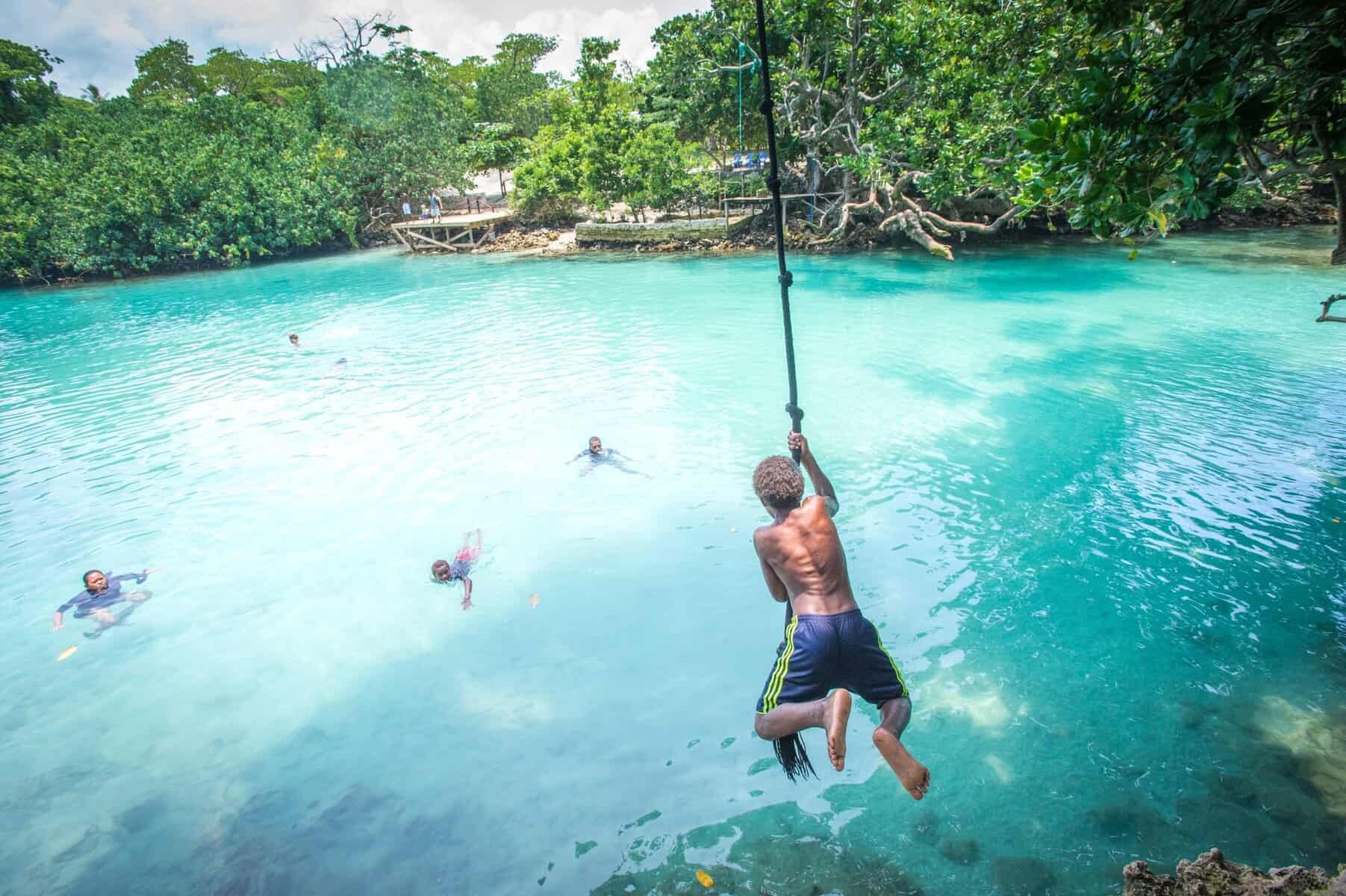
The VTO is focusing its marketing efforts on Australia and New Zealand. Solomon Islands is now flying from Auckland to Espiritu Santo, so the VTO is also promoting that destination as a place where visitors can slow down, experience soft adventure attractions such as the island’s blue holes, pristine Champagne Beach, and the Millennium Caves.
‘We hope they come back’: New Caledonia
“We are back to normal” was also the message from New Caledonia Tourism’s Marketing Director, Philippe Artigue.
In May last year, violence broke out over French government changes to a voting law that indigenous Kanak people feared would compromise their push for independence. At least 13 people died in the violence. A political solution is still being sought.
The economic fallout has been severe, including to the vital tourism industry. Now, a new campaign, “New Caledonia, a new chapter awaits” has been launched in Australia, New Zealand, and France.
The tourism authority spoke of new products coming online, including serviced apartments opening early next year and the Nautilus 360, the largest catamaran now operating in New Caledonian waters, which sleeps 15 people and travels from Noumea to neighbouring islands.
New Caledonia is also promoting its hiking trails, moonlit paddling through Blue River Park, and Broussard (ranch) experiences on its east coast, and the Santalwood Cup, a pirogue (traditional outrigger) regatta at Lifou in November. Teams from Fiji and Vanuatu have already confirmed their participation in this traditional sailing event.
Artigue says they hope to see more frequent flights from Air New Zealand and Aircalin this year as travel advisories are reviewed, and to convince Fiji Airways to recommence service between the two destinations.
“We hope that they come back, because we expect to touch more diversified markets, for example, from the USA, and to make better combos with other Pacific destinations with Fiji Airways. So yeah, we try to convince them, and they analyse the situation,” he said.
Artigue notes that 85% of the cruising sector has recovered without any problems.
“Maybe governments take more time to reconsider the situation, but the traveler doesn’t wait for their government. They want to see New Caledonia, and they are coming back. Each month, we recover 10pc more.”
Aviation policies
The New Caledonia and Vanuatu delegations were among 79 tourism sellers—national tourism offices, airlines, properties, and activity providers—who met more than 60 buyers at the SPTE.
Pacific Tourism Office (SPTO) Chief Executive Chris Cocker says arrivals across the Pacific Islands totaled about 1.9 million in 2024. While this was still 8.9% short of pre-COVID figures (2019), Pacific tourism industries have shown great resilience.
Cocker says Vanuatu’s delegation sent a strong message that “We are here, we are ready for business, we have recovered, come and see us.”
“But the other challenge they have is their air connections. What is actually inhibiting their growth is the challenges they are going through with their national carrier. Interestingly enough, in our aviation readiness workshop, connectivity came out very strongly, and the idea of tourism playing a more active role in aviation policies – there needs to be a linkage because we are both very interdependent.”
Air Vanuatu went into liquidation in May 2024, after months of accumulating debt, canceled flights, labor shortages, grounded planes, and maintenance difficulties. The Vanuatu Government is still trying to salvage the airline.
Visit islandsbusiness.com for more stories from SPTE.