IF any country is punching above its weight in the fight against climate change, it has to be Tuvalu.
Headed by the indefatigable Feleti Teo—Prime Minister, former diplomat, and civil servant—the country comprises nine atolls with a combined area of 25 square kilometres and a population of less than 11,000.
At every opportunity, Teo highlights the fight his people have taken on despite the continually rising sea levels, which threaten to make the country a new-age Atlantis before 2100.
For Teo and Tuvalu, the immediate action to save the country is centred on minimising the destructive impact of king tides and tidal surges.
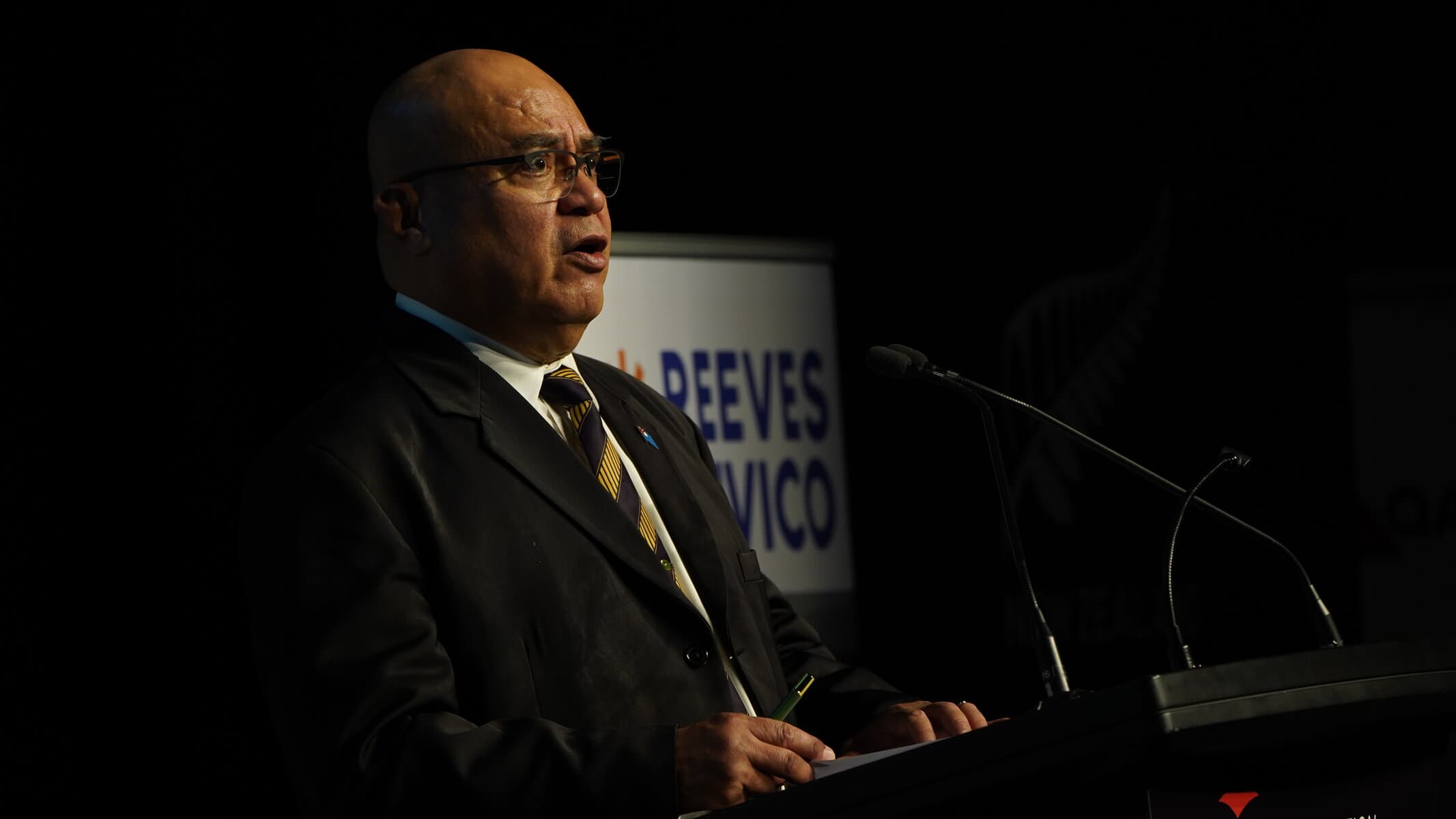
“We have reclaimed land on Funafuti, where houses have been built, and now we are reclaiming more land, but it’s going to be raised higher than the current levels of the atoll,” Teo said at the Pacific Infrastructure Conference in Brisbane.
Under this initiative, Tuvalu gained 7.5 hectares of land, which was suitable for building, and under the second phase of the project, a further eight hectares—this time elevated—will become available for housing projects.
A similar project has been set up on Kwajalein Atoll in the Marshall Islands.
Representatives from the Marshall Islands, Tuvalu, and other small island states met contractors and donor partners in Brisbane at what is perhaps best described as an industrial exposition and discussion on infrastructure.
Asked what impact such meetings would have, Teo was frank.
“It’s critical. All the major companies are here. We don’t have the personal contact with these big companies, so developing contacts with them means they have a better appreciation for our situation.”
Fiji’s Public Works Minister, Ro Filipe Tuisawau, went a step further, suggesting a regular gathering of Pacific Islands Forum infrastructure ministers to allow conversations and collaboration at a higher level than a trade show.
“Infrastructure development is hugely important,” Tuisawau said, “yet we don’t often get together at that level. Without infrastructure—roads, water, electricity, health facilities, tourism, and airports development cannot be effective.”
Tuvalu’s National Strategy for Sustainable Development, titled Te Kete (The Basket), has been one of the more effective in the region and sets high-level strategic development goals for the period 2021 to 2030.
This includes upgrading the safety of all classrooms in the country and improving waste management systems, which are under enormous pressure due to the dense populations on Tuvalu’s atolls.
Some of the country’s population density issues may be offset by a partnership, which allows Tuvaluans to take up employment and residency in Australia under the Falepili Union, which was signed in 2023.
In the Funafuti Lagoon, a floating solar farm has cut back the country’s reliance on expensive fossil fuels, and the concept continues to be rolled out across Tuvalu, which has limited land mass to support the project.
Tuvalu and Kiribati have accessed funding for these solar farms under an Asian Development Bank facility, and tenders have been called.
“At the moment, we are still 50% reliant on fuel but the current prediction is for 100% [renewable energy] by 2030,” Teo said.
Tidal and wind energy, at this stage, will not be part of Tuvalu’s efforts for alternative power sources.
While Teo acknowledged the commitment of countries to the Paris Agreement at COP15, he said there needed to be a greater effort to ensure that these promises—to decarbonise and transition to lower-carbon and renewable energy, to keep global temperature rise below 2.0 degrees—became a reality.
“Every five years, countries should review and enhance their NDCs and submit more ambitious actions to reduce greenhouse gas emissions,” Teo said.
“If you ask them, most Tuvaluans will want to stay in Tuvalu,” Teo said.
“And the comforting thing about our new, elevated status with Australia is that our people are not compelled to stay, yet the visa remains with them all their life.
“We encourage them to come for education and work, to contribute and then return to Tuvalu to retire.”
Teo said the increased income through employment in Australia, and possible remittances to relatives who remained behind on the islands, would contribute to better infrastructure, homes, and elevated, safer atolls.
He said the Falepili Union was open to Tuvalu’s diaspora, and many of them had taken advantage of visas offered by Australia.
Tuvalu is the fourth smallest nation in the world, and one of the most vulnerable to the impacts of climate change.
Cyclone Pam displaced 45% of Tuvalu’s population in 2015, a measure of its vulnerability to wind, rain, and the sea.
At the time, Pepetua Latasi, Director of the Climate Change Department, said Tuvalu’s population was heavily dependent on effective climate change management and variability.
“With the islands of Tuvalu being only a few metres above sea level, a slight increase in sea level will have severe consequences on human health, food and water security, housing, infrastructure, land, and marine biodiversity,” Latasi said.
“On both international and national scales, we should take coercive measures rapidly to preserve our people and culture.”
Teo admitted that flooding—especially in Funafuti—had worsened significantly. This means that Tuvalu’s infrastructure needs are huge.
Funafuti, projected for 2040, includes a desalination plant, overhead water storage tanks, a new underground potable water supply network, and a new sewage micro-treatment plant.
Teo will have his work cut out for him, and the fight against climate change will remain an ongoing battle for years to come.