AS Pacific leaders gather in Honiara, Solomon Islands, for their annual discussions, the specter of China will loom over them.
In the months preceding the Pacific Islands Forum, China worked the back channels to ensure that the hosts would exclude Taiwan from the meeting. China regards Taiwan as a rogue province and demands that the Pacific regard the island in the same way.
Solomons Prime Minister Jeremiah Manele has rejected claims that China influenced him to declare the Taiwanese delegation non grata at the talks. There are few governments or observers who believe him.
China—through its Wellington Embassy—reacted angrily to claims of interference by New Zealand Foreign Minister Winston Peters.
The reactions of the leaders of Fiji, Papua New Guinea, Republic of Marshall Islands, Samoa, and Tuvalu
point clearly to a combined belief that China has interfered in the region’s processes.
In Pacific cultures, interference is considered rude – a lack of understanding, a failure to recognise the delicate balance required in the traditional diplomacy which is steeped not in bilateral agreements, but in relationships of respect.
The approach taken by China and the United States is generally one of black and white, for or against, friend or foe. That is too simple a concept in a region in which it is possible to be friends to all, despite ideological differences, and where survival dictates that some relationships must exist despite the discomfort they bring.
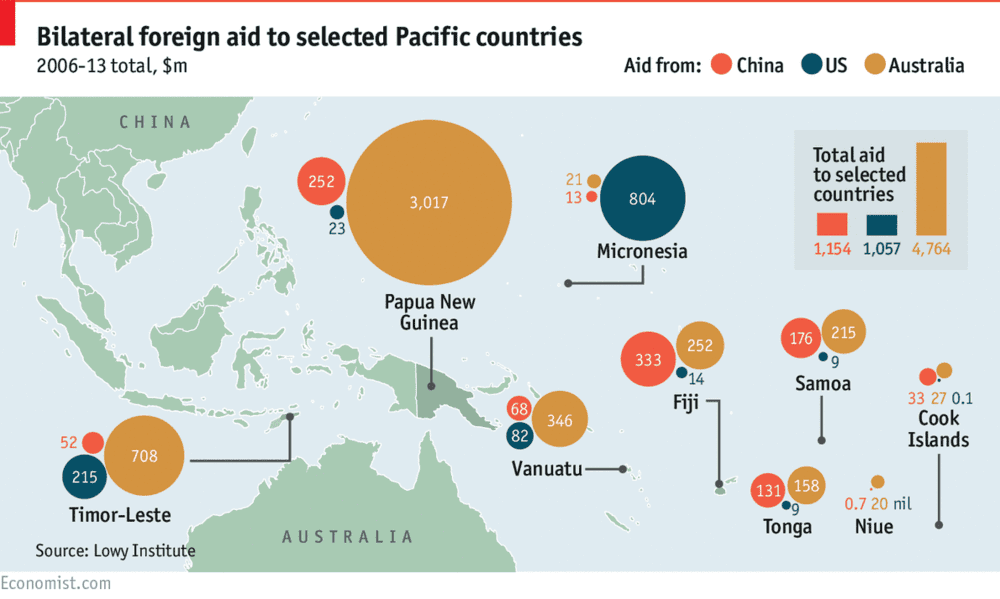
China’s political issues with Taiwan need not be the concern of Pacific leaders. And the fact that China links its development dollars to demands that independent Pacific nations reject Taiwan’s independence is unacceptable.
It is ironic that the Chinese position on human rights abuses suffered by Fijians under its previous government was that it did not interfere in the affairs of sovereign nations. Yet it will coerce sovereign nations on matters concerning its own internal affairs.
In a bid to save face, Manele blocked China, the United States, and other development partners from attending the regional talks. Far from settling the situation, this move served to show how quickly leaders act to pacify partners rather than taking a principled stand.
Earlier this month, Forum Foreign Ministers gathered in Suva, Fiji, and noted what they described as “the ongoing dialogue’’ with France and Indonesia on a raft of issues ranging from self-determination to human rights abuse.
But it is unlikely that the Forum in Honiara will produce anything other than diplomatic niceties regarding continued talks. Yet Pacific people in Kanaky (New Caledonia) and West Papua will continue to suffer while their leader’s fiddle with words on bilateral agreements.
Similar statements will be made on deep-sea mining, climate change, and nuclear proliferation.
Going into these talks, Pacific leaders would do well to learn from the recent success of their young people at the International Court of Justice in the Netherlands.
The issues which affect the region’s people must be addressed with conviction.
That means respectfully speaking uncomfortable truth to development partners who do not respect the Pacific Way.