American Samoa
IN a significant move aimed at environmental protection, American Samoa has formally opposed deep-sea mining in its waters. This position directly counters the Trump administration’s push for rapid resource extraction, highlighting a conflict between federal and territorial priorities. Local leaders, including Governor Lolo Matalasi Moliga, have expressed concern about the potential for severe ecological damage to marine ecosystems, which are vital to the territory’s culture, food security, and economic stability. The decision underlines a commitment to preserving ocean resources for future generations.
Commonwealth of Northern Mariana Islands
IN a first of its kind venture, a project is uniting local commercial fishers with NOAA scientists. The first-ever Northern Mariana Islands Bottomfish Survey enlisted the expertise and vessels of fishermen to conduct a comprehensive stock assessment of deep-water snapper and grouper species. This partnership, hailed as a model for community-based science, is set to provide crucial data which will help in the preservation of vital fish stocks. The initiative not only improves the accuracy of the science by tapping into local knowledge, but also helps to somewhat bridge the gap in trust between the fishing industry and regulatory bodies.
Cook Islands
THE traditional voyaging canoe Hōkūle’a was received with much fanfare in Rarotonga. The stopover marked somewhat of a reunion between the Hawaiian and Cook Islands voyaging communities. It was a celebration of common Polynesian and cultural and voyaging traditions. The visit, part of Hōkūle’a’s ongoing Moananuiākea Voyage, served to strengthen ancestral ties and reinforce a collective commitment to ocean stewardship and cultural preservation.
Fiji
FIJI has confirmed it will officially inaugurate its Jerusalem embassy in mid-September 2025. Prime Minister Sitiveni Rabuka’s administration is proceeding with the plan, a move that mirrors a handful of countries, including the United States. The decision is seen as a significant foreign policy move, and is expected to draw strong reactions from various segments of the international community.
Guam
CONCERNS are being raised by Guam’s residents and business community, following a recent Executive Order by President Donald Trump that alters international postal agreements. Confusion is the order of the day following the legislation, which has raised uncertainty about the potential for increased shipping costs and service disruptions for mail and packages sent to and from the US mainland. Local officials are seeking immediate clarification from the US Postal Service on the order’s full implications, worried it could lead to higher prices for essential goods and isolate the island from efficient stateside mail service. The situation highlights Guam’s vulnerability to the whims of federal policy.
Kanaky-New Caledonia
PRO-INDEPENDENCE parties have levelled sharp criticism of French authorities, accusing the government of intentionally delaying the decolonisation process in New Caledonia. The parties cite Paris’ perceived feet dragging on setting a timeline for a new self-determination vote, following the rejection of previous independence referendums. Critics say that Paris seeks to prolong the status quo, undermining the Nouméa Accord’s principles and the territory’s path toward self-governance. This has heightened political tensions and deepened distrust between pro-independence groups and the French state, leading to more uncertainty over the next steps in the decolonisation dialogue.
Kiribati
TROUBLE is brewing in Kiribati as the government of President Taneti Maamau has chosen to ignore a landmark Court of Appeal ruling. The court had found the government’s suspension of two high court judges in 2022 to be unlawful, and ordered their reinstatement. The government’s refusal to comply, has sparked fury from the opposition, legal experts, and civil society, who accuse the administration of undermining the rule of law and judicial independence. The standoff is creating uncertainty over the separation of powers, and the resultant implications for the country’s democratic institutions.
Marshall Islands
THE Marshall Islands is slowly coming to grips with losing a piece of its history, after a devastating fire completely destroyed the Nitijela, the nation’s parliament building, in the capital of Majuro. The historic building, a monument to the country’s democratic legacy, was gutted, along with invaluable traditional artifacts and historical records housed inside. A state of emergency has been declared with President Hilda Heine promising to rebuild. There have been temporary disruptions to government operations but has also outpourings of solidarity and support from across the Pacific region and international partners. The cause of the blaze is still being investigated.
Nauru
NAURU is set to for a significant windfall, after signing an agreement with Australia, valued at $AUD162 million. The funds are going towards the construction of new facilities to house deportees from Australia under its offshore processing policy. This agreement extends Nauru’s long-standing role as a key regional partner for Australia on immigration and border security. The deal represents a substantial economic inflow for the island nation and ensures the continued operation of the offshore processing centre, a consistent source of much needed revenue.
Niue
NIUEAN Prime Minister Dalton Tagelagi has stated that implementing a Cost-of-Living Adjustment (COLA) for public servants is currently “not an option” for the government, this is in spite of the country bracing itself for expected increases in the cost of imported goods and fuel. Tagelagi cited significant budgetary constraints and the need for fiscal responsibility as the primary reasons for the decision. The announcement comes as residents and businesses face mounting economic pressures from global inflation, sparking affordable living concerns.
Palau
PALAU Community College (PCC) has achieved a significant milestone in national education by launching its first-ever baccalaureate degree program. The new Bachelor of Science in Education will allow students to complete a full fouryear degree locally. It will specialise in elementary school education. The initiative will help to address a critical shortage of qualified teachers within the nation and reduce the need for students to seek higher education abroad. The program marks a significant expansion of PCC’s role and is a crucial step toward educational self-sufficiency, and retaining professional talent in Palau.
Papua New Guinea
UN SECRETARY-GENERAL António Guterres praised Papua New Guinea (PNG) during a historic parliamentary address, highlighting its extraordinary cultural diversity and commitment to unity. It marks the first visit of a sitting UN Chief to PNG; he commended its use of dialogue to build peace, citing the Bougainville Agreement. Guterres also emphasised PNG’s leadership in global climate action, urging continued ambition at COP30. He called for greater inclusion of women and reforms to international financial systems to support developing nations like PNG.
Samoa
THE FAST party, led by La’auli Leuatea Schmidt, has secured victory in Samoa’s general election, positioning La’auli to become the nation’s next Prime Minister. The result marks a significant political moment, reinforcing the party’s mandate to take the country forward after a period of intense political
rivalry. The transition is expected to prioritise economic stability, infrastructure development, and public sector reform.
Solomon Islands
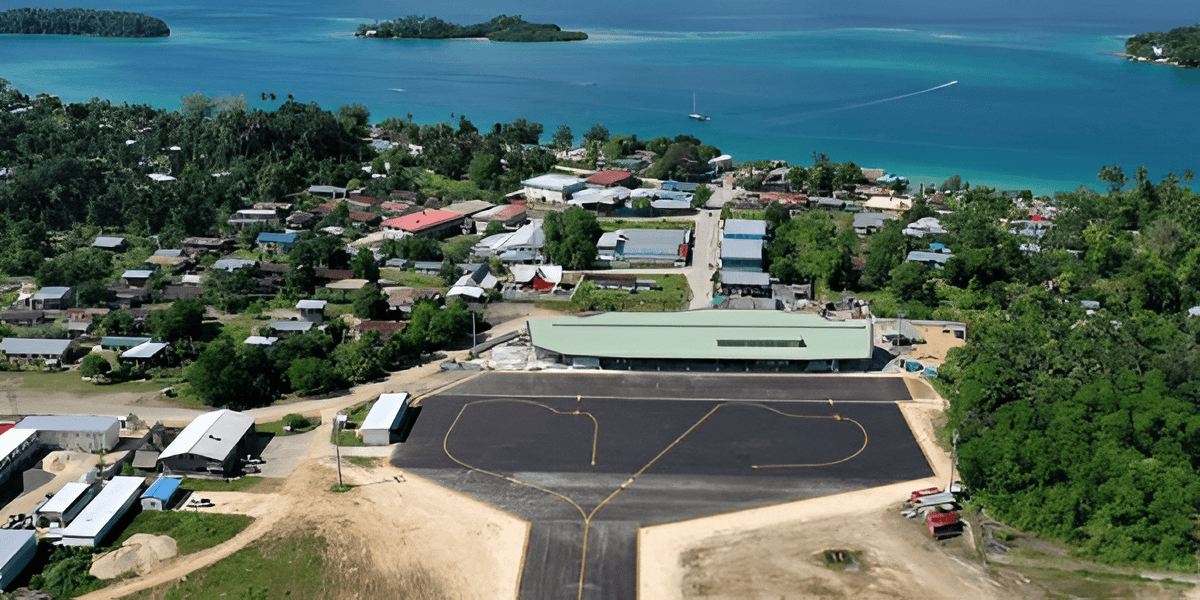
THE Solomon Islands Ports Authority has suspended operations at all sufferance wharves, effective immediately, because of critical safety concerns and structural deficiencies. The decision follows recent inspections that revealed significant deterioration, posing risks to vessels, cargo, and personnel. The suspension is expected to disrupt domestic and regional shipping logistics, impacting trade and the delivery of essential goods.
Tonga
POPULAR tourist destination Vava’u is experiencing a significant fuel shortage due to shipping delays and a recent surge in local demand. The combination of logistical disruptions and increased consumption has strained supplies, impacting transportation, fishing operations, and generatordependent businesses across the island. Authorities are working hard to speed up the next fuel shipment and manage distribution priorities until reserves are replenished.
Tuvalu
IN a lifeline for the country, Australia is formally offering a special “life-changing” visa pathway to citizens of Tuvalu, providing a permanent resettlement option amid escalating threats from sea-level rise and climate change. The initiative, part of a broader bilateral agreement, allows Tuvaluans to live, work, and study in Australia, acknowledging the existential risks facing the low-lying atoll nation. While the move offers immediate protection and opportunities for displaced communities, it also underscores the urgent and irreversible climate challenges threatening Tuvalu’s sovereignty and homeland.
Vanuatu
VANUATU’S youth are at the forefront of climate advocacy, partnering with organisations like UNICEF on community resilience projects. They’re driving change through disaster preparedness, sustainable agriculture, and digital innovation. Their efforts underscore the vital role of youth leadership and intergenerational collaboration in climate adaptation.