IN a career spanning nearly five decades, Dr Eddie McCaig has been a surgeon, a professor, a mentor, and a pioneer in Fiji’s health sector.
But if you ask him about his legacy, he won’t point to the shelves of medals and awards. Instead, he’ll talk about the friends he’s made – the countless patients who stop him in the street to say thank you and share stories of healing.
His journey into medicine was almost accidental. A failed eyesight test for maritime school and a chance suggestion during a public service interview set him on a path he had never envisioned as a student.
Graduating from the Fiji School of Medicine in 1975, McCaig’s career began under a cloud of political retribution for leading a student strike, leading to a posting at the remote Wainikoro Health Centre, northeast of Labasa—Fiji’s northern administrative capital—on a dusty, gravel road.
It was there, far from the trappings of modernity, that his dedication to service truly took root.
“The people of Wainikoro petitioned that I stay. I was a nice guy,” he recalls with a chuckle, a reflection of the community and grassroots connection, which would become a hallmark of his career.
McCaig’s quest for expertise took him to New Zealand, where he trained as a general surgeon before specialising in orthopaedics. Despite lucrative job offers from around the world, he and his wife made a conscious decision to return to the Pacific, settling in Fiji in 1990. He played a central role in setting up the orthopaedics department at Lautoka Hospital, where he later served as Medical Superintendent.
His capacity for work seemed limitless, but it came at a cost. At the peak of his responsibilities, he was serving on 23 different committees. The breaking point eventually came. “I was shivering and shaking… I got my blood pressure taken and it was in the roof. I took my blood sugar, it was in the roof,” he recalls.
That very evening, he made a conscious decision to step back from most of his roles for the sake of his health. This personal health crisis gave him a profound understanding of the public one. He speaks with passion about preventable diseases, especially diabetes, which he calls an epidemic not in its prevalence, but in its devastating, preventable complications.
He offers simple, practical advice that could save countless limbs.
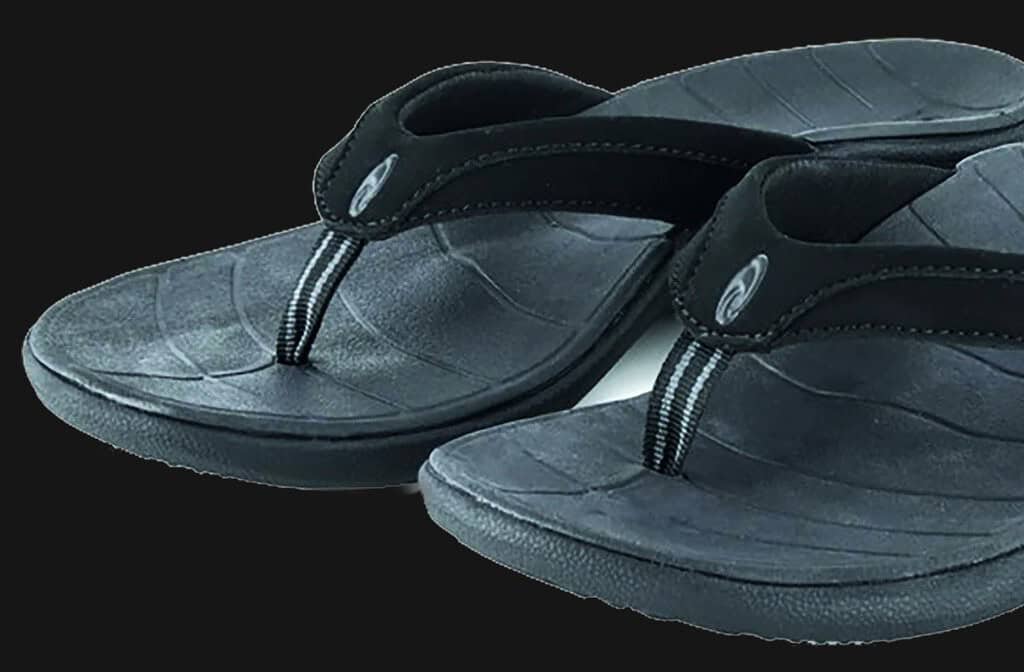
“In Fiji, if we don’t look after our diabetes and simple things, make sure people wear flip-flops. Clean their toes and feet. Bath at night, you know, the basic things. If they got something wrong with their feet, go and see a doctor.”
He believes a national focus on basic foot care could make a dramatic difference.This focus on doing the basics right extends to public health enforcement. He is a fierce critic of smoking and dangerous driving, stating unequivocally: “There’s no such thing as an accident. You look at the road conditions, the car conditions, and the driver.”
He argues that until there is serious enforcement against drivers distracted by phones or impaired by alcohol or yaqona (kava), roads will remain unsafe.
Now officially retired, McCaig’s passion for a functional health system remains undimmed. He is adamant that the “brain drain” of doctors and nurses is not primarily about money.
“It’s all about the working conditions… In Fiji, we’ve even had a paper written about the stress that specialists face. It’s a huge stress thing.”
In a full-circle moment, the career that began in political exile ended in a similar fashion.
“As it started under a cloud of political retribution, it also ended,” he said.
“I retired from active practice in 2019 but decided to work pro bono as a mentor in surgery. Sadly, this was brought to a halt when I received a phone call from a surgeon who had been ordered by [the then-Minister for Health] Dr Ifereimi Waqainabete and former Prime Minister [Frank] Bainimarama to ban me from the CWMH. Thus ended my career.”
Yet, his dedication persists. Formal banishment from the hospital grounds could not sever the bonds of a lifetime of service.
“I am consulted on a regular basis with phone calls, emails, Viber messages [and] I’m always glad to help.”
Despite the institutional challenges and his own forced departure, McCaig’s love for his field is undeniable. The true reward, he says, has always come from human connections. “We don’t do it for the money. We do it for the friends we make. And the friends are our patients.”
As he enjoys a hard-earned retirement, he leaves behind a powerful challenge: to admit shortcomings, seek wise counsel, and never lose sight of the patients.
And, perhaps, to remember the preventative power of a simple pair of flip-flops.