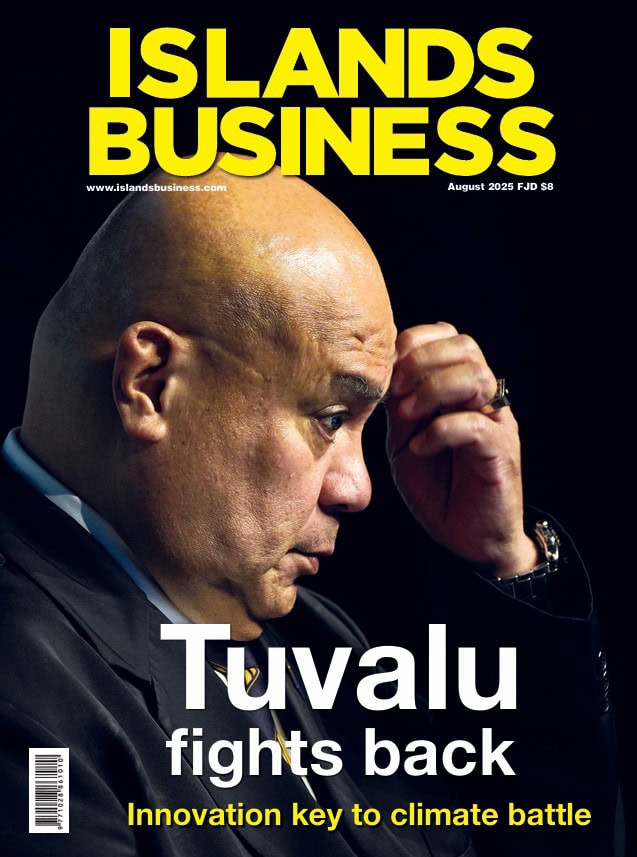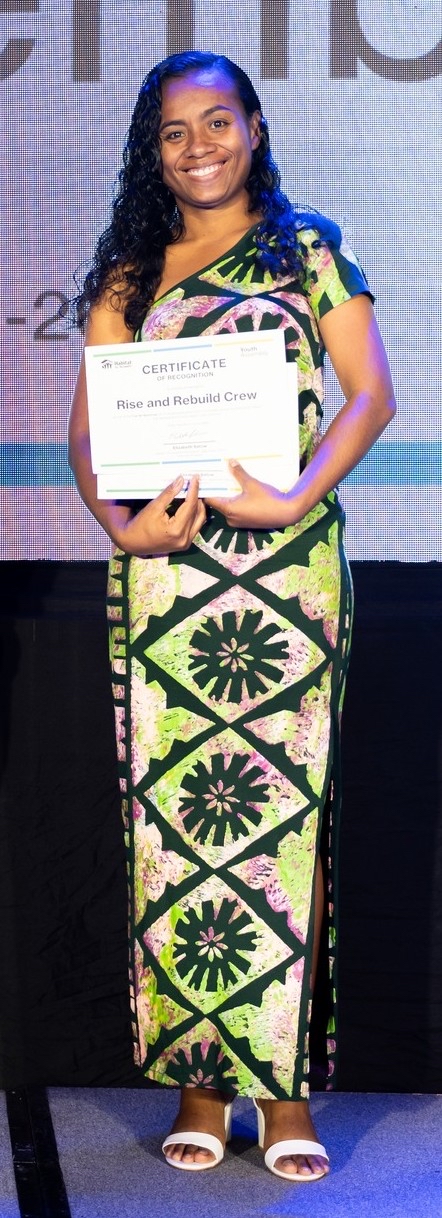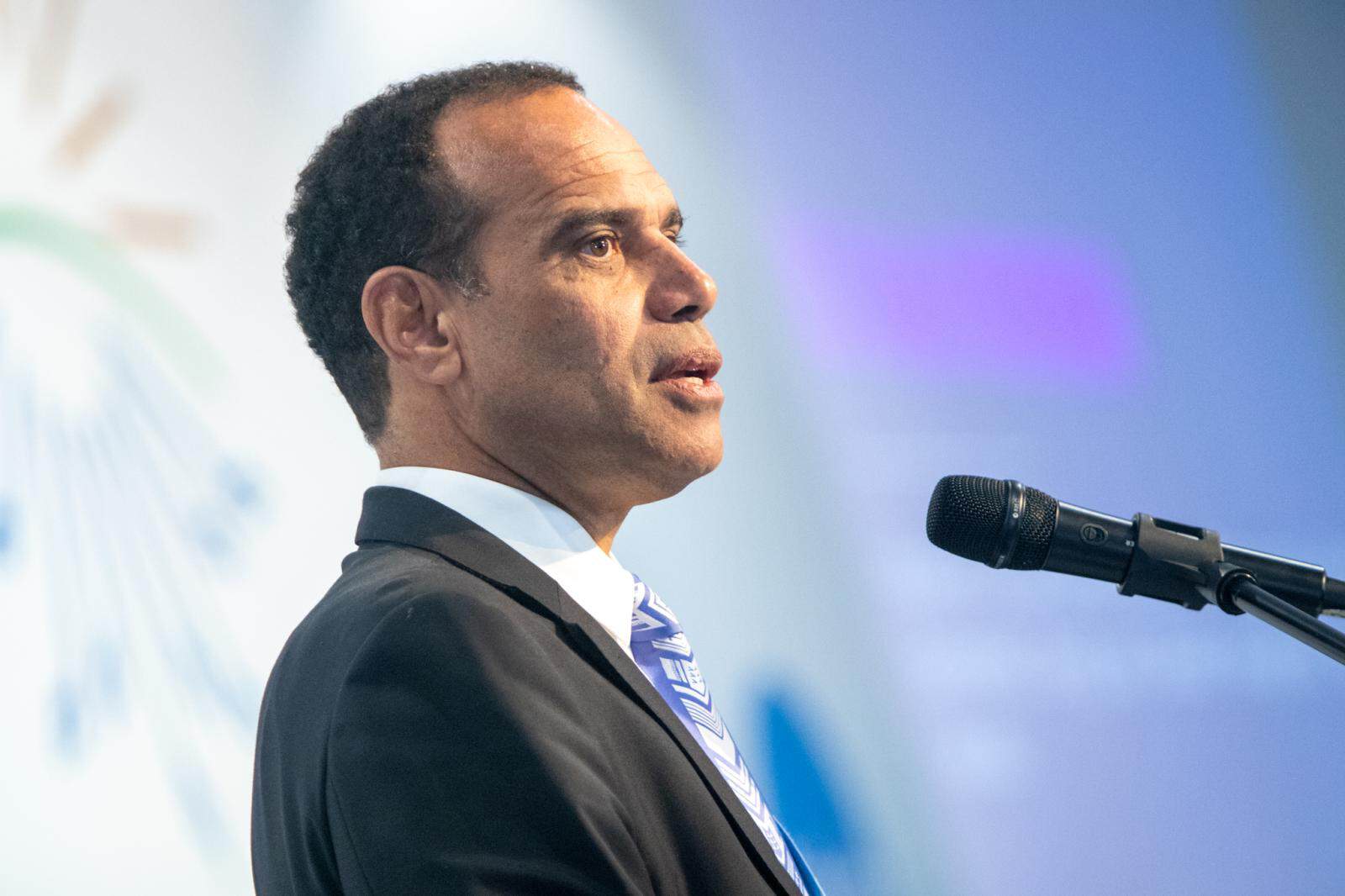
IN the medieval era, a champion was a warrior who entered the field of battle to fight for those who could not fight for themselves. Today, the field is the global stage of climate diplomacy, the weapons are law and moral argument, and for the Pacific Island nations facing an existential threat, their champion and our Person of the Year is Ralph Regenvanu, Vanuatu’s Minister for Climate Change. While speaking to the
media, Regenvanu has been unequivocal about where things need to go from here.
The delivery of a landmark advisory opinion from the International Court of Justice (ICJ) in July was a vindication of those views.
For Regenvanu and the youth and young people from the region, who helped drive the Vanuatu-led campaign for the ruling, there are no two ways about it. Speaking to CNN, he cut to the core: “It really makes it clear that action on climate change is a legal obligation, and so that removes a lot
of the excuses.”
A single statement that moves us from vulnerable countries dependent on charity to a situation requiring the worst emitters to take concrete and verifiable actions to curb their excesses.
For Regenvanu and the Pasifika community he represents, this legal shift is really about survival, not academic debate. Pacific nations like Vanuatu are on the drowning front lines of a crisis they did not create. To CNN, he tried to paint a picture of reality on the ground: “We are actually experiencing loss and damage. It’s beyond adaptation. We’ve done all we can to adapt, but we don’t have the resources.”
Armed with the ICJ’s authority, Regenvanu can now directly call the world’s largest polluters to account.
In an interview for ABC Pacific Beat, he did not mince words about regional partner and erstwhile “big brother” Australia, a major fossil fuel exporter: “Australia is committing internationally wrongful acts because it is sponsoring, it is subsidising fossil fuel production… So, it needs to align itself… and start making reparations.”
This is the deliberate, confrontational language of legal accountability, needed to change the economic calculus of a G20 nation.
Ultimately, every legal manoeuvre and diplomatic confrontation is aimed at a single goal: the security of people in the Pacific. “What we want is we want our communities to be secure,” Regenvanu said.
The victory he seeks is not a symbolic legal opinion, but the tangible resources—finance, technology transfer, and a mandated fossil fuel phase-out—that will give Pacific communities a viable future.”
In Ralph Regenvanu, the Pacific has found a champion. He is not fighting with a sword on a physical field, but with the full weight of international law in the court of world opinion, in the halls of the UN, in the media, and at negotiation tables to secure the long-term security of the nations he defends. The ICJ ruling is his gauntlet, thrown down before the world’s great powers.
Regenvanu is our Pacific Person of the year.
From village garden to world stage
IN July, the International Court of Justice (ICJ) handed down its advisory opinion on the legal obligations of states in relation to climate change.
The opinion reaffirmed the argument of a group of Pacific students that states have a legal duty to reduce carbon emissions. And they must protect the environment and respect the human rights of those affected by environmental harm and climate change.
That moment was the culmination of six years of tireless work by a group of unlikely climate advocates. Among them was Solomon Islander Cynthia Houniuhi, who grew up on a small island. Her first encounter with climate change was on Fanalei, where islanders had been forced to move due to the encroaching sea.
Many years later, at law school in Vanuatu, Houniuhi would come face to face with the injustice faced by Pacific Islanders because of the inaction of governments and multinational conglomerates regarding damage to the environment.
With the memories and stories of Fanalei in her mind,Cynthia joined a group of students to take up what would be the biggest climate change case to the International Court of Justice.
“This was an opportunity to do something bigger than ourselves, bigger than our fears,” she told the BBC in an interview this year.
“What is the use of learning all this knowledge if it’s not for our people to fight the single greatest threat to their security?”
It is an unlikely story. A girl from a small Pacific Island, where fishing and planting root crops are the way of life, who takes on the world and wins.
We honour Cynthia Houniuhi and the original 27 students who formed the Pacific Island Students Fighting Climate Change and forced the world to listen.