FOR a small Pacific nation in 2026, the price of safe skies is high, and the cost of failure is immeasurable.
In a region where a single aircraft represents a vital lifeline for trade, tourism, and emergency medical evacuations, aviation safety is far more than a technical requirement; it is the backbone of national resilience.
While international best practices require significant investment, the alternative—a single accident that can ground entire fleets and shutter island economies—proves that for these nations, safety is not a luxury, but an absolute economic imperative.
“There are Pacific countries that are quietly under pressure in meeting global aviation safety standards,” Pacific Aviation Safety Office (PASO) General Manager Silimana’i Ueta Solomona Jr. said.
“Several PASO Member States in the region score below the global average for the Effective Implementation (EI) of International Civil Aviation Organization (ICAO) Standards, as measured through the Universal Safety Oversight Audit Programme (USOAP).
“This reflects common small-island aviation challenges like limited expertise, geographic spread, and high oversight costs – not a lack of political will or commitment to safety.”
PASO’s Member States have shown a strong commitment to aviation safety through ongoing ICAO engagement, regulatory investments, and regional solutions when national systems face limits.
He said with regional leaders like Papua New Guinea and Fiji working with PASO, the goal is clear: for every Pacific state, regardless of size or capacity, to have safe, secure, and resilient aviation.
“Through committed Member States, regional leadership, and international support, PASO ensures no country is left behind, and aviation continues to enable connectivity, trade, and economic resilience across the Pacific.”
Unaddressed safety findings have placed essential aviation services at risk. Through strong diligence by operators and annual audits supported by PASO, these issues were prioritised and resolved.
However, operator performance and routine surveillance alone are not sufficient for long-term resilience. PASO and its Member States continue to strengthen a robust, system-wide oversight framework to ensure safety issues are identified early, addressed consistently, and managed sustainably.
This ensures essential air services remain safe, reliable, and uninterrupted across the Pacific.
The global aviation safety system can, at times, feel lopsided for small island states, but it is not arbitrary nor disconnected from reality. ICAO-prescribed safety standards have been methodically developed over decades, each one rooted in lessons learned from past accidents and incidents. In aviation, standards exist because something once failed and the international community agreed that failure was unacceptable to repeat.
For some Pacific states, this can feel disproportionate. There are countries in the region that receive as few as one scheduled international flight a week. It is understandable to question why the same global standards apply to such low-frequency operations as to major aviation hubs. However, aviation risk does not scale down with traffic volume. If that one aircraft has an accident, the impact on a small island state would be catastrophic socially, economically, and reputationally – far more damaging than in larger, diversified markets.
There is also a common sentiment that the standards may be too much for Pacific states to achieve. Unfortunately, aviation does not offer a sliding scale or formula to answer the question, “How safe are we?” There is no slide rule for safety. Safety is not measured by intent or effort alone. It is achieved through robust systems, consistent oversight, and disciplined implementation.
The only proven way to manage aviation risk is to build and maintain systems that ensure safety every day: effective regulatory oversight, compliant air and airport operators, certified aerodromes, trained personnel, and continuous surveillance.
While the standards are global, the way states meet them can differ, and that is where regional cooperation and shared oversight models become essential.
So, the issue is not whether the global system is fair, but whether states are supported to meet it in a way that reflects their context. For the Pacific, the answer is not to lower the bar, even for low-frequency operations. An accident involving one flight a week is no less devastating than one involving a hundred flights a day. The solution lies in strengthening systems through regional frameworks and partnerships that make those global standards achievable, sustainable, and meaningful for small island states.
Across the Pacific, real and well-known safety challenges represent a clear opportunity to strengthen aviation systems across the region.
- Safety systems that are still maturing, particularly at some airlines and airports that are moving from basic compliance to more proactive safety management.
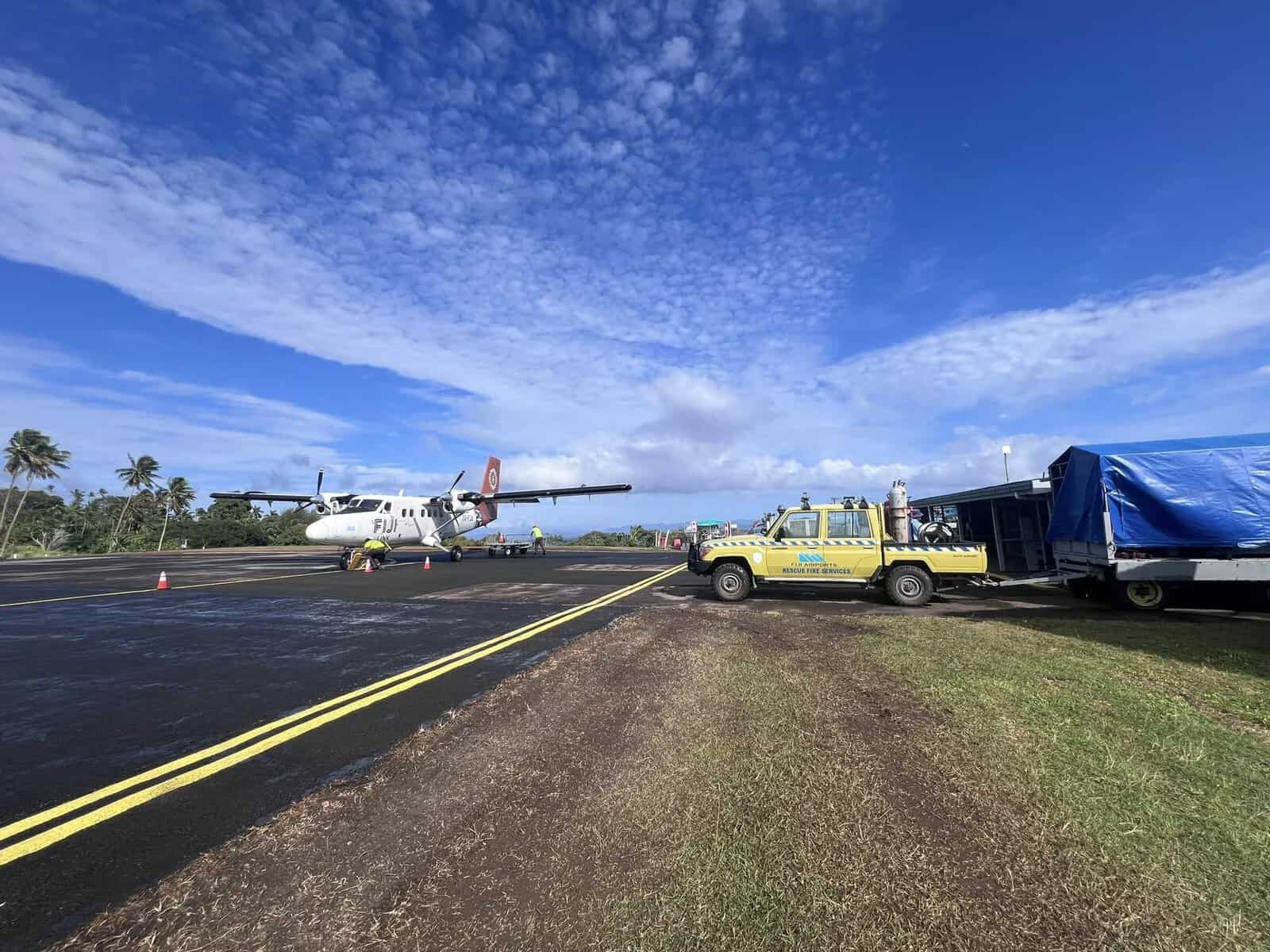
- Airport safety challenges, such as fire and rescue capability, runway reporting, and maintaining certification – especially at remote or low traffic aerodromes.
- State-level safety systems that exist but can be better used to analyse data and prioritise risks.
These issues are not signs of failure. They are typical of small island aviation systems and are fully understood. Most global demand for skilled professionals reaches new heights, small island states are losing the battle against a push–pull effect that drains local talent and leaves vital safety oversight roles vacant.